
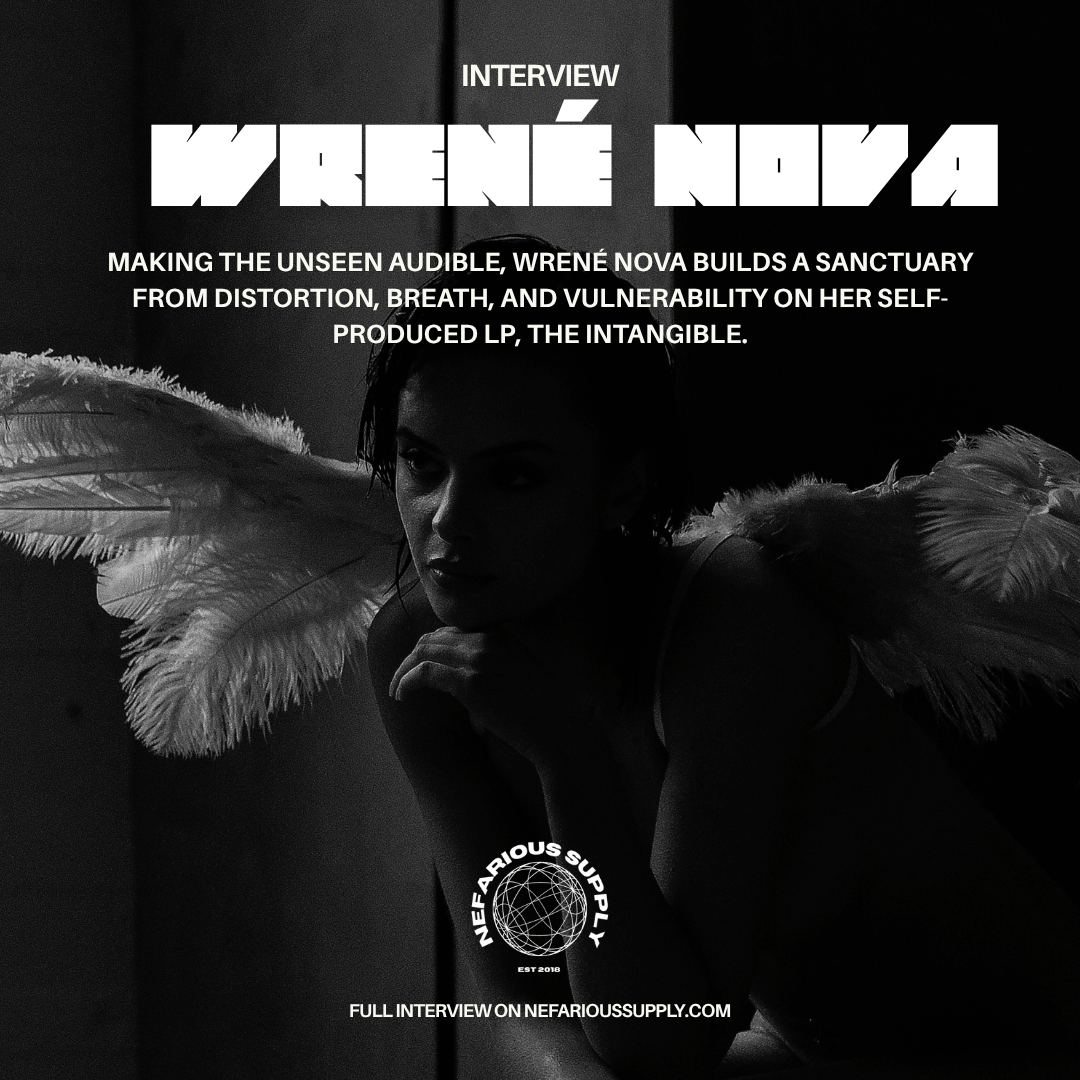
Wrené Nova makes electronic music for the feelings that don't have names yet. On The Intangible, an album she wrote, performed, produced, mixed, and mastered entirely herself, she sets out to do exactly what the title promises: make the unseen audible.
The record moves along the edges of trip hop, electronic art music, avant-pop, and contemporary balladry without ever settling into any of them. Wrené built it by instinct rather than blueprint. Sounds earn their place because of where they land in the body, how sharp or soft they feel, or because a moment happened once in the booth and could never happen again. The genre tags, as she tells it, only come later.
That instinct gives the album its texture. Distortion sits beside breath. Restraint gives way to release. Where a lot of electronic music gets polished until it feels far away, The Intangible keeps its rough edges on purpose, closer to a confession than a showcase. Wrené has a name for that spirit: "digital age grunge," a raw, uncategorizable refusal to shape music around what algorithms reward.
There is a quieter defiance in how the album exists, too. Tired of pouring work and soul into releases that only lived online, Wrené wanted this one to be something you could hold. It arrives as people are returning to physical media and supporting artists directly, an attempt to pull something heavenly down from the cloud and into the real world.
Underneath all of it is vulnerability: faith held against hard evidence, longing, survival, and the strange work of facing what's inside you while still trying to hit the right notes. Focus tracks "Archangel," "No Flag," "No Skin Against The Wind," and "Tomorrow will come (drip drop)" offer the clearest way into that world.
We talked to Wrené about faith, vulnerability, self-production, the artists who share her emotional imprint, and building a sanctuary out of sound.
=
You describe The Intangible as an attempt to "make the unseen audible." What was the first feeling, memory, or internal truth that made you realize this album needed to exist?
There's something really deep and human that happens, for me, when I'm able to drop into a feeling without intellectualizing it- and being able to understand everything. And at that time, what was 'unseen' for me was this feeling of profound faith in that I was going to have a beautiful life- despite all this evidence that my mind had collected, and all the things that had/hadn't happened for me, despite all the depression in and around me. I had a personal longing to bring down something heavenly into my world as something I could hold in my hands- and to show myself that if I could 'bring that down' and create that, then I could continue to do so with any other genuine desires. So now I've got a nice record, I'm still figuring out the rest. Honestly I don't always feel as high or as enlightened as I'd like but it's a good start.
And also the timing of it made sense as a small act of defiance against the feeling of pouring so much work and soul into things that ultimately only lived online- with all the streaming releases etc. It was happening during a collective shift where many people began to turn back to collecting, and rediscovering the magic of owning physical media and supporting artists directly, because we're getting tired of the corporate 'cloud' economy. So I brought 'THE INTANGIBLE' down from the cloud where there was no heaven.
The album sits between trip hop, electronic art music, avant-pop, and contemporary balladry, but it also feels like you are resisting easy genre language. When you were building the project, were you thinking in terms of genre at all, or were you chasing something more emotional and sensory?
In these times, I consider it a huge privilege to be able to carve your own space away from all the external noise that we're constantly bombarded with- and to find freedom in hearing yourself, or more simply- just asking yourself 'what do I like?' and 'what do I want to hear right now?' 'who do I want to embody right now?'- and that goes into the micro stages of producing a song too, with the sound selection it becomes- 'I want this to vibrate here', 'I want this layer to feel like a shard of glass,' or 'oh that vocal take happened by accident, and I can't replicate that moment again- put it in the comp' I think you can always interpret or identify what something might be after it's created- but the actual stages of 'building' the project are not at all calculated- I'm just adding strokes to the canvas. I'm not sure if that's more of following an emotional or sensory thread, or just removing the part of yourself that wants to control the process. And then those genres that are described are just ways to interpret the sound after hearing it- like writing down the details of a dream you had and you are trying to remember- how do I explain this experience I just had to others?
You called the spirit of the album "digital age grunge." What does that phrase mean to you, and how does it show up in the production, writing, and vocal choices across the record?
I call it digital age 'grunge' because that movement in the 90's was a raw and authentic rebellion against the status quo at that time, and this has a very similar intention. It's electronic music that dares to be a bit 'uncategorizable' in the age where conforming to and pleasing algorithms is the norm. It's also a record where it becomes very emotive in unfiltered ways- which would be recognizable to people who can empathize with it.
You performed, produced, wrote, mixed, and mastered the album yourself. How does having that much control change the emotional honesty of the work? Does self-producing make it easier to protect the original feeling, or harder because you are inside every detail?
I believe regardless of who's producing your record- a good artist who creates from emotional honesty can never have that taken from them. A good song can still be a good song- even if the production is ass- and a well produced shitty song is still well produced. I suppose meeting somewhere in the middle is the ideal haha.
I actually really enjoy the time I put into developing production skills as part of the process- and experimenting with new tools and sounds- because to me it's a lifelong evolution and a part of sustaining longevity as an artist. I'd never knock someone for outsourcing their production- and I'm always improving too. Knowing myself, I'll probably hate this record in 5 years (or tomorrow) because of the gap in my personal improvement. It's all just an extension of artistry and craft and allows you to keep a cohesive sound- it also makes you more valuable as a collaborator and sets a precedent for what you can contribute to others down the line.
A lot of electronic music can feel polished to the point of distance, but your description of this album emphasizes breath, vulnerability, distortion, restraint, and release. How did you balance precision with something more raw and human?
I think that answer lies in just having the awareness that I never stopped feeling or never shut myself off during the entire process, and that my taste naturally gravitates to those moments of 'perfect imperfection'. It's just a preference that I've been able to identify- and all my favourite music that inspires me also has these qualities. Nothing wrong with polish or refinement- it's just not as sexy to me as something with a little bit more texture, edge or vulnerable 'danger'.
The title The Intangible points toward things people feel but do not always articulate. What are some of the emotions or truths on this album that you felt were hardest to give shape to?
That's a really clever and difficult question to answer because it requires me to try to articulate what these feelings are- which I also feel I don't have the authority to. Especially for what those feelings might be to others. I'll say 'vulnerability' in my case. It's difficult to give shape to anything vulnerable because you physically seize- and that's the beautiful danger of being a human. Choosing to move through these difficult feelings- instead of maybe drugging them away, or hurting others. You booked a studio instead, and there's a flashing red light- and now you have to face that thing that's inside you AND remember to sing the right notes.
Which song on the album changed the most from its first version to the final master, and what did that transformation teach you about the project as a whole?
Actually, I was very lucky with this project that there were almost no reworks on any track. Some tracks may have taken more time than others to fully come together, but the process was pretty focused from start to finish. I would work on a track until I was happy with it, and then I would move on to the next, and then I would decide that I wanted to strip back a couple tracks to just voice and piano, and make new songs from the stems of the completed songs as the transition tracks, and that was it. I was able to make swift creative decisions from the start to finish.
Your focus tracks include "Archangel", "No Flag", "No Skin Against The Wind", and "Tomorrow will come (drip drop)". What made those songs feel like the clearest entry points into the album's world?
These songs were just the first songs that I started producing as my 'next project' before I conceptualized that the LP was going to be 'THE INTANGIBLE'. This is how I usually begin my albums. I start with a few songs just to follow and create an atmosphere that I like- and then I begin to understand what it is I'm making or what my intention is. It starts by being unconscious, and the first songs reveal what's going on and inform me on where to continue.
Let's talk about "No Skin Against The Wind." Even from the title, it suggests exposure, vulnerability, and maybe a kind of emotional weather. What was the emotional center of that song for you?
That description of what it suggests feels accurate to what it's about for me. My knee jerk answer to 'what was the emotional center of that song' is: waiting too long for something that feels necessary for your survival, and you're standing in the middle of that pain and you just have to accept that for your eternity and then the pain minimizes just enough to continue surviving.
You mention wanting music to be an immersive experience that strips away artifice. When you are making a song, how do you know when something feels too decorated or too guarded?
When you know something isn't honest- you feel like a fraud. If a performance or something I write doesn't 'go there', then it's just deeply unsatisfying. Like faking it during sex- afterwards you feel 'that was shit and now I'm empty'. I'm already fighting against a lot of numbness in daily life- it has no place in my sanctuary XD
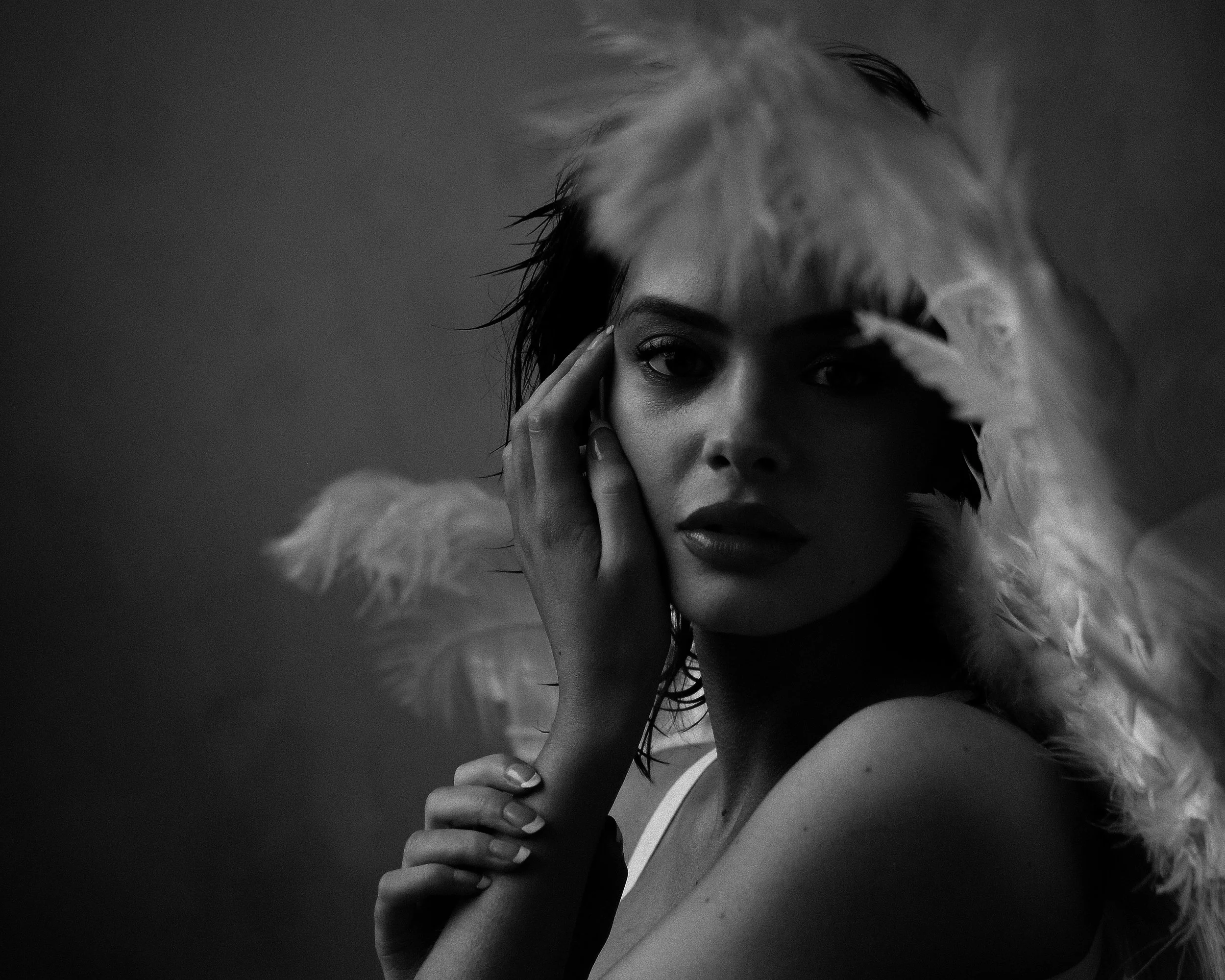
There is a strong visual and physical quality in the way you describe the project: sonic worlds, distortion, breath, shape, release. Do you see music visually when you create, and did The Intangible have a color palette, landscape, or visual language in your head?
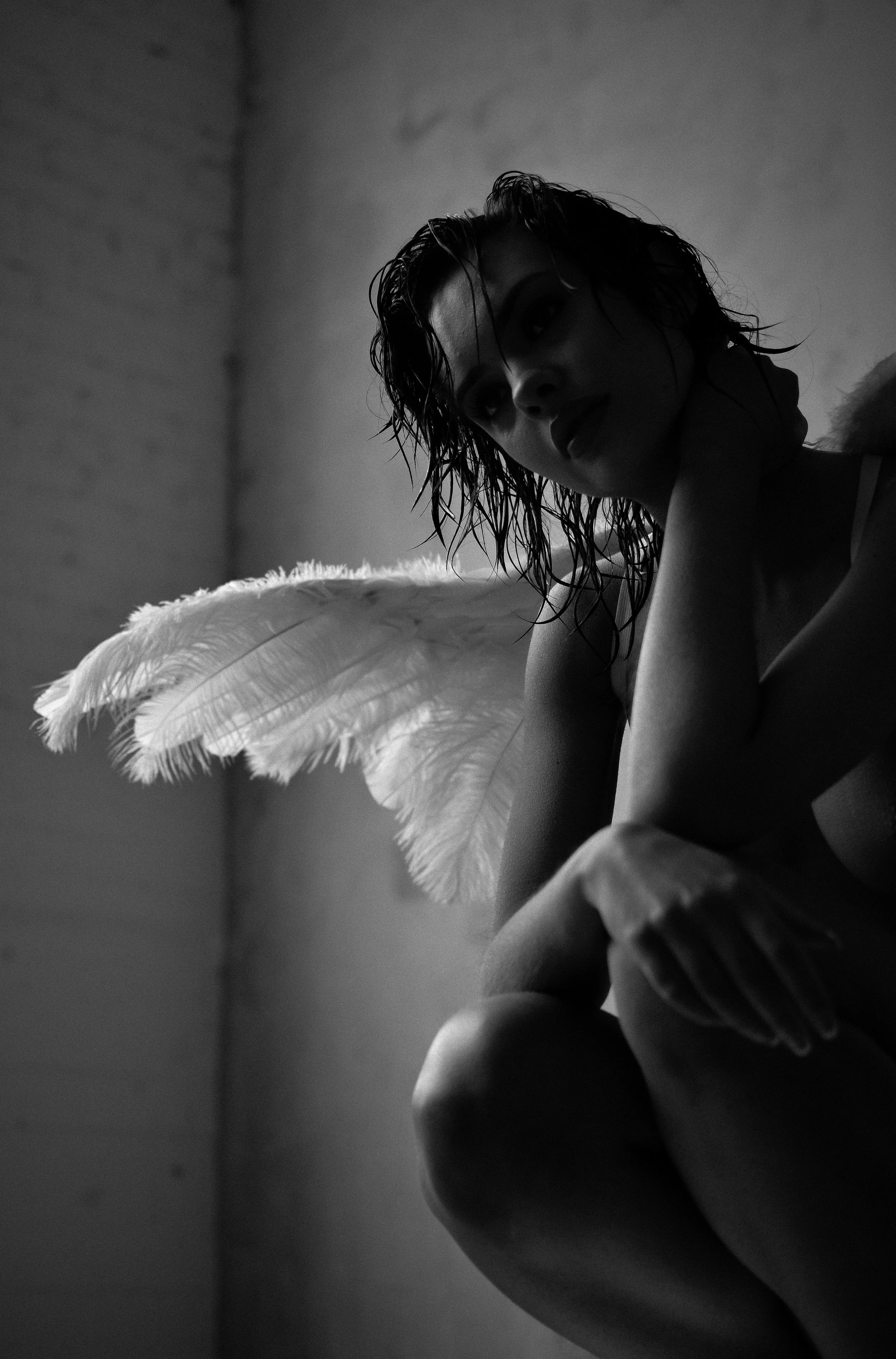
That's a really nice observation that I appreciate! And it did- THE INTANGIBLE is a fluid and transmutable entity of very bright white light that acts like a film or protective barrier over shadows. That's how I imagine it when I listen to it.
Your influences listed include Björk, FKA Twigs, and Massive Attack, artists who all build worlds rather than just songs. What did you learn from artists like that, and where did you feel the need to push away from those references to find your own language?
Whenever I describe artists as being influential to me, it's less about their literal sound and more of just a statement of 'these artists create music that matches my emotional imprint and personal taste' so that others that also appreciate something about these artists may gravitate to me as being likeminded in taste.
I'm never consciously thinking 'I'm going to make a Massive Attack's Mezzanine with a twist of FKA Twig's Cellophane', it's just the music I'm choosing to listen to personally when I'm having a smoke and wearing headphones.
The project credits include Sam Fortin on piano and keys, and Beryl Kessio / Kaleidokitty on additional production for "The depths of your insolence." How did collaboration enter a project that is otherwise so self-contained and self-produced?
I just felt that those particular songs worked on the album, and they happened to be born from existing collaborations. If at any point in the process, regardless if I'm the one to rework something or bring it to the finish line, if anything involves another person- they are credited. Especially on this album, for the songs they were featured on- those contributions were huge.
When someone finishes The Intangible front to back, what do you hope has shifted in them? Not just what do you want them to think of the album, but what do you want them to feel newly able to name?
My ideal hope or dream vision for this record is that it's in the hands and collection of people that recognize an emotional journey similar to their own, and when they listen to it front to back- they can process vulnerable feelings that they are working through, and give themselves permission to feel okay for 40 minutes. I hope they can discover and newly name a small sanctuary for themselves, and find something in the album's presence that speaks uniquely to them.
Spending time with The Intangible feels less like pressing play and more like being invited into someone's private world. It's a record that asks you to slow down, stay with it front to back, and let yourself feel what usually goes unsaid. We're grateful to Wrené for the honesty she brought to this conversation and for trusting us with the story behind the music. If you find a little shelter in this album too, hold onto it.
We cover what moves us. Send what moves you.
This conversation started the way so many of our favorite stories do: with an artist reaching out. Nefarious Supply has covered underground music independently since 2018, and discovering music this way never gets old. If you're making something you believe in, submit your music and tell us the story behind it. We'd love to hear it.
Selected artists may be considered for interviews, playlists, and editorial features. No fees. No pay-to-play. Ever. Submitting puts your work in front of us; it does not guarantee coverage.