
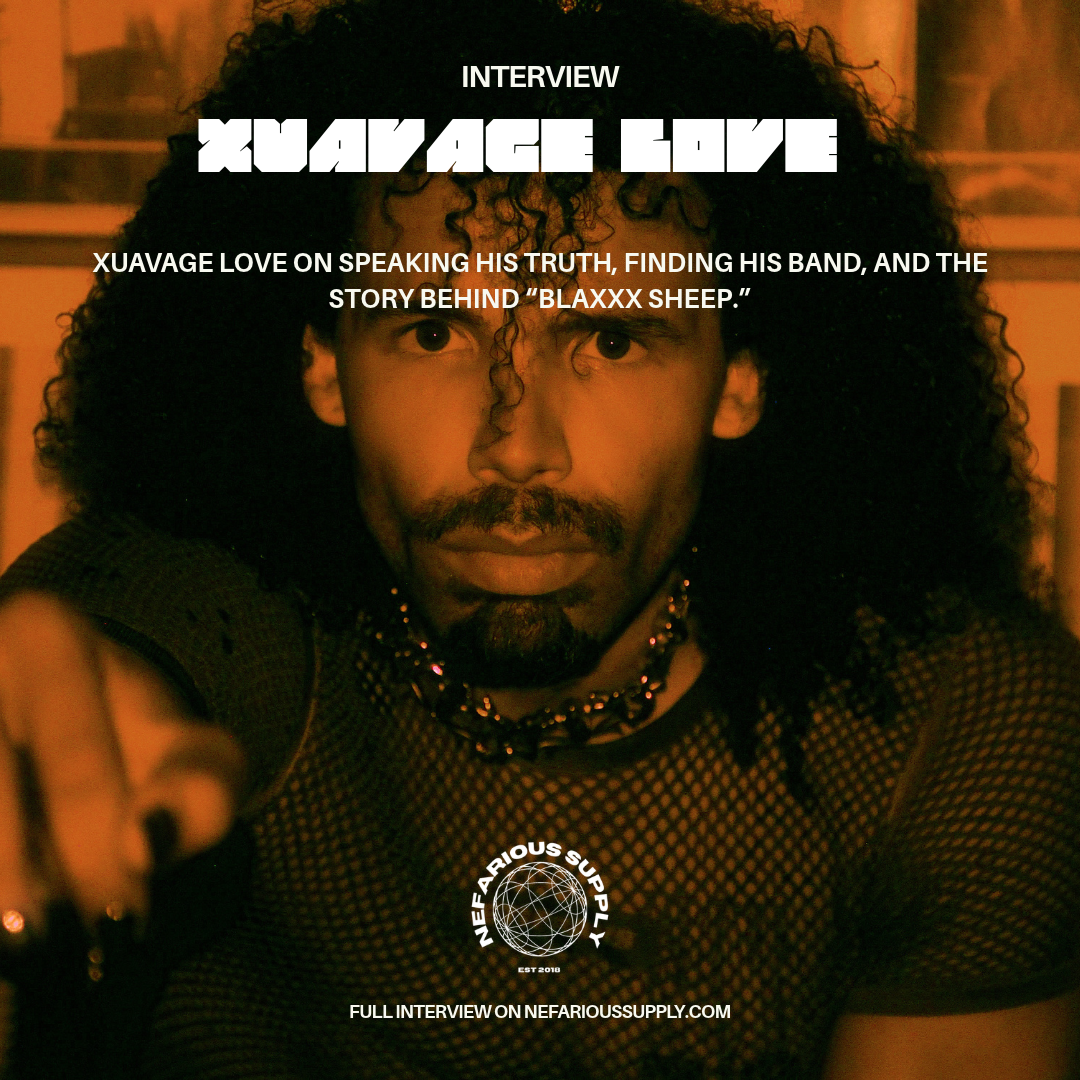
Before “BLAXXX SHEEP” became a song shared with a band, it was a one-take freestyle over a beat Xuavage Love found on YouTube. Years later, Daniel Campbell, Nahuel Franco and Ian McDaniel, the musicians who make up The Rainbows, brought their own ideas to it. The group performed the song live before taking it into the studio, where its raw energy found a new shape through layered vocals, guitar, drums and bass.
For Xuavage, the black sheep is more than someone who doesn’t fit in. It’s someone learning to speak a truth they once swallowed, even when it makes others uncomfortable. The song makes room for people who have carried rejection and inherited pain, while questioning the cost of bending themselves to belong.
Ahead of the single’s November 13 release, he spoke with us about the experiences behind “BLAXXX SHEEP,” creating its visual at home with one camera and one light, and the trust that lets each member of The Rainbows be heard.
Your team describes “BLAXXX SHEEP” through family rejection, inherited pain and feeling like an outsider; what made this the story you wanted to tell with The Rainbows now?
“BLAXXX SHEEP” came at a time when I was finally learning to love everything inside of me. Through the pain, the faults and the flaws, I found what I call a newfound glory. I realized I had spent so much of my life adapting to belong that I never felt at home. I would think, “No one really wants to hear what I have to say,” and swallow my truth. When I finally spoke it, it made people feel. It made people uncomfortable, as well as question their beliefs, their thoughts, and even themselves. It also made room for me to be whole.
The Rainbows are the light behind the darkness of the truth I bring. Their sound, their energy and their presence give me the freedom to share what I once kept hidden. Darkness is one of the most relatable things that we go through as humans on this earth. Sometimes what we call darkness is a wall keeping the light from coming through. My truth may seem dark, and speaking it breaks that wall and allows the light to shine. That’s where The Rainbows come in.
We wanted this song to be a communion for those who have felt rejected, who carry inherited pain, whose truth has made them feel like outsiders. A place where we can stop bending ourselves to fit. Because bending ourselves that way can break us, and we deserve to remain whole. I used to believe I needed to break to find peace again. Now I understand I was longing to feel. Fitting in had left me numb, uncomfortable for so long that pain became a way to feel something again. There was relief and release in it. I wouldn’t recommend that path. I’m learning that the best release is telling the truth, allowing myself to be where I’m supposed to be, without having to break to belong.
What did calling the song “BLAXXX SHEEP” help you say about being an outsider, beyond the familiar image of not fitting in?
To me, the BLAXXX SHEEP carries more than the feeling of not fitting in. It carries the weight of being treated as if your difference brings shame to the people around you. You become the scapegoat, the one people point to because you refuse to obey a tradition or live inside an expectation that doesn’t belong to you. What people reject can be the very thing that makes you powerful. It’s an image, a feeling, an energy they aren’t familiar with. Sometimes I think that energy frightens people because they recognize a freedom they haven’t allowed themselves to feel. Calling the song “BLAXXX SHEEP” helped me give that person another meaning. Someone who is authentically themselves, whose rebellion is simply refusing to abandon who they are. I connect with that as an artist and an entrepreneur. You have to believe in something before other people can see it, and endure the discomfort of standing alone long enough for something to change.
I believe the BLAXXX SHEEP is often a leader before anyone recognizes them as one. The person who refuses to follow the leader and, by being themselves, begins to lead without ever having to announce it.
Your official page describes Xuavage Love & The Rainbows as a four-piece; how did an early idea for “BLAXXX SHEEP” become an arrangement shared by the band?
“BLAXXX SHEEP” began with a simple beat I found on YouTube. I threw it into Logic and freestyled the whole song in one take. Not a single word has changed from that original freestyle. I remember showing it to Rambo, and he said, “I really like this.” I was like, “For real? Okay.” A couple of years later, he came back to me and said, “We should do something with this song.” He shared it with Nahuel and Ian, and they just ripped it apart with their ideas. We were performing it before we had even recorded it as a band, and it became one of our most intense songs to play. The Rainbows, Rambo, Nahuel and Ian, took that idea and made it a complete collage of frequencies that you can’t place in one category. It was one of the most amazing experiences I’ve ever had. When we finally took it into the studio, it developed into this smooth rage of harmony. Vocal textures, rhythmic drumming, guitar melodies, ambient sounds and hard bass lines. It just became life.
As an artist and creative director, how did you choose the visual language for “BLAXXX SHEEP” without making its personal story too literal?
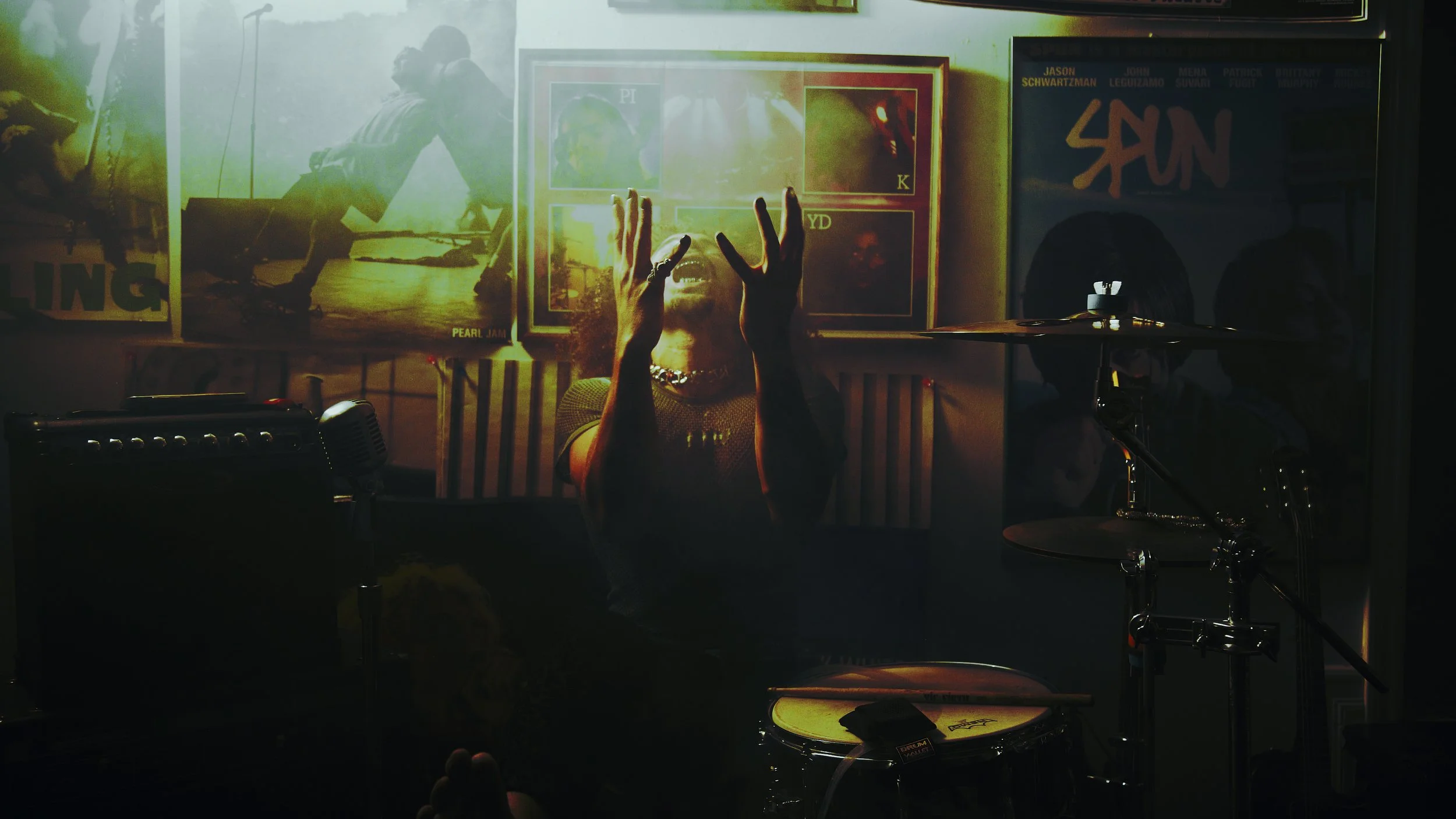
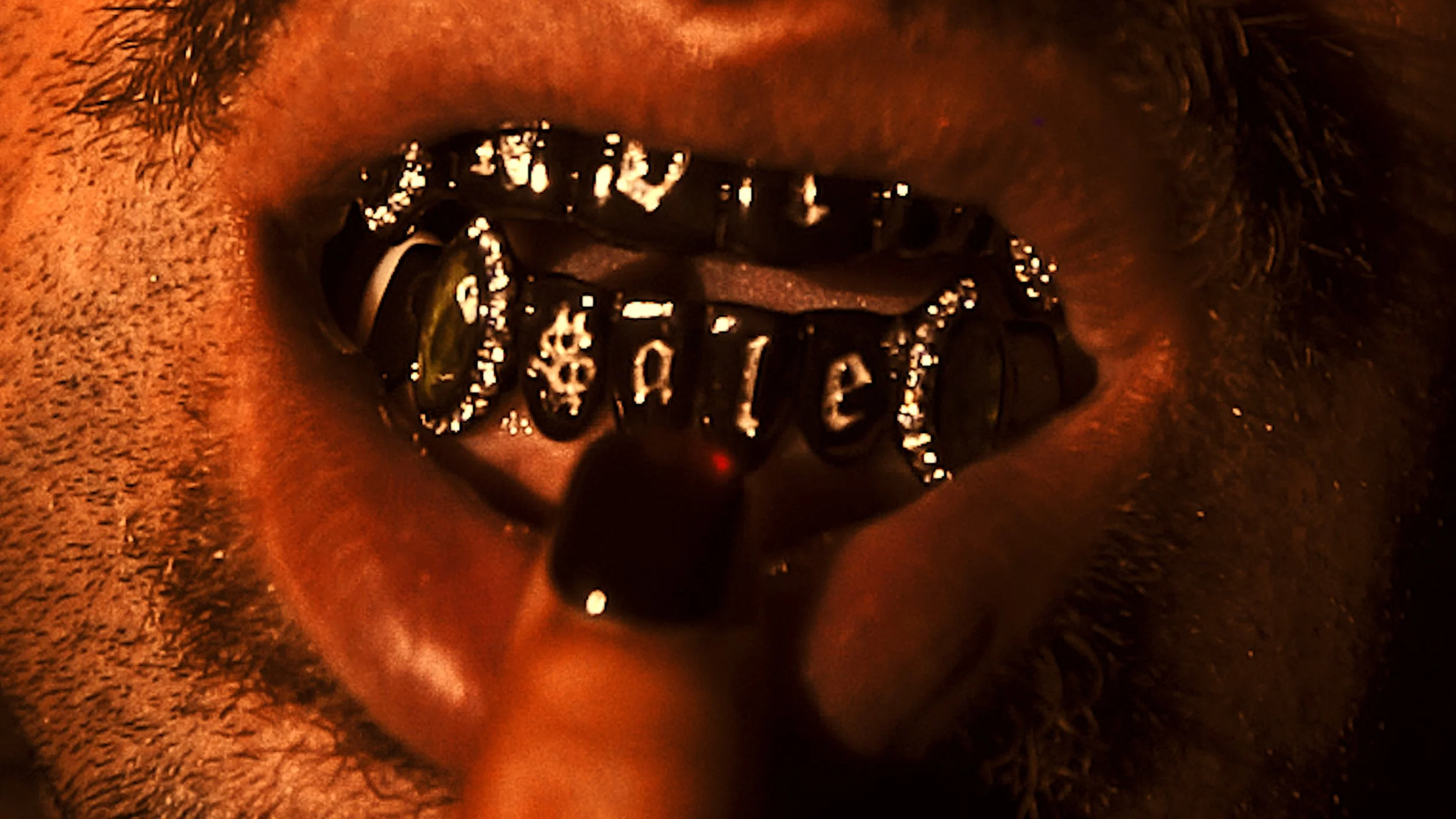
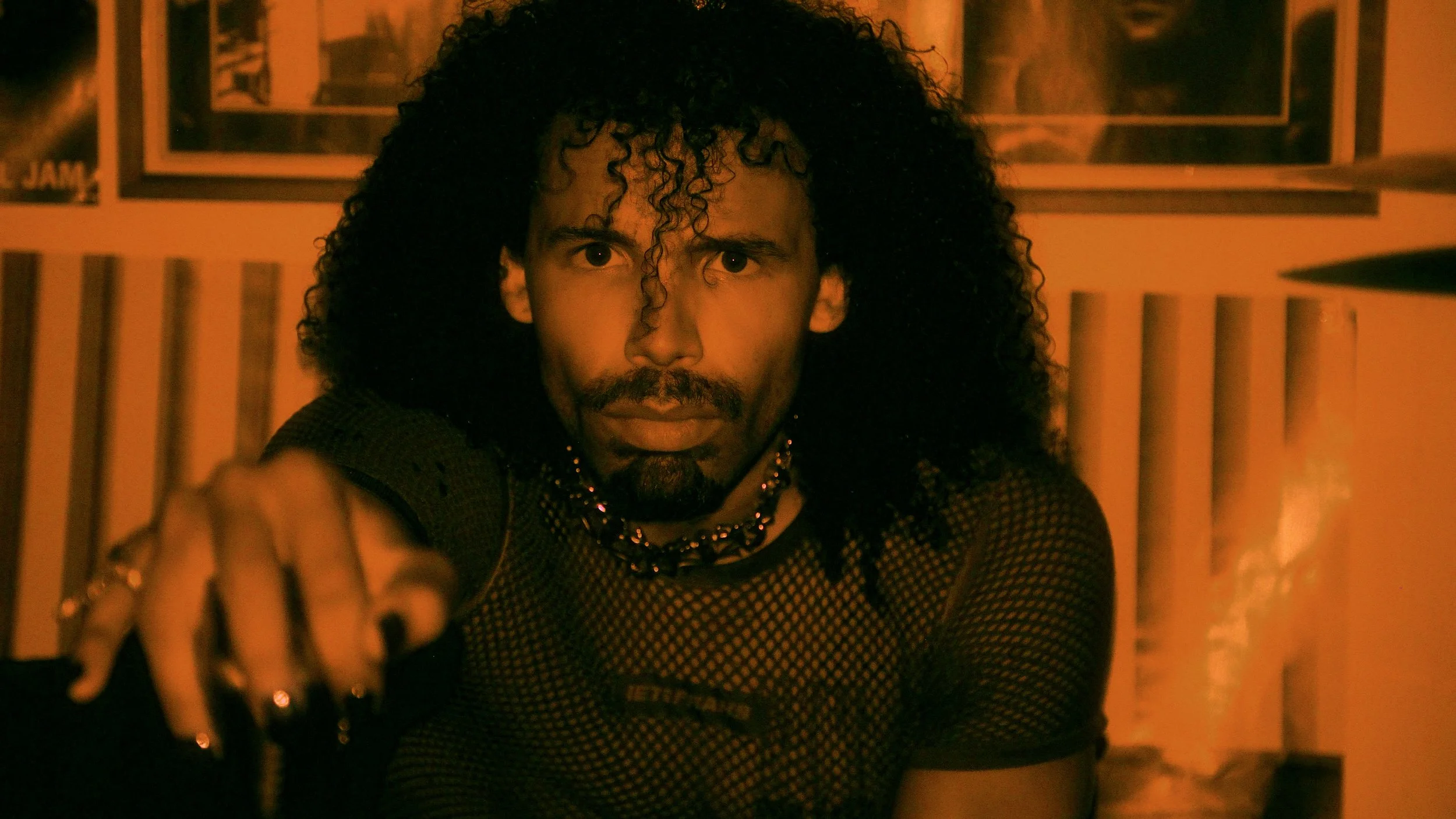
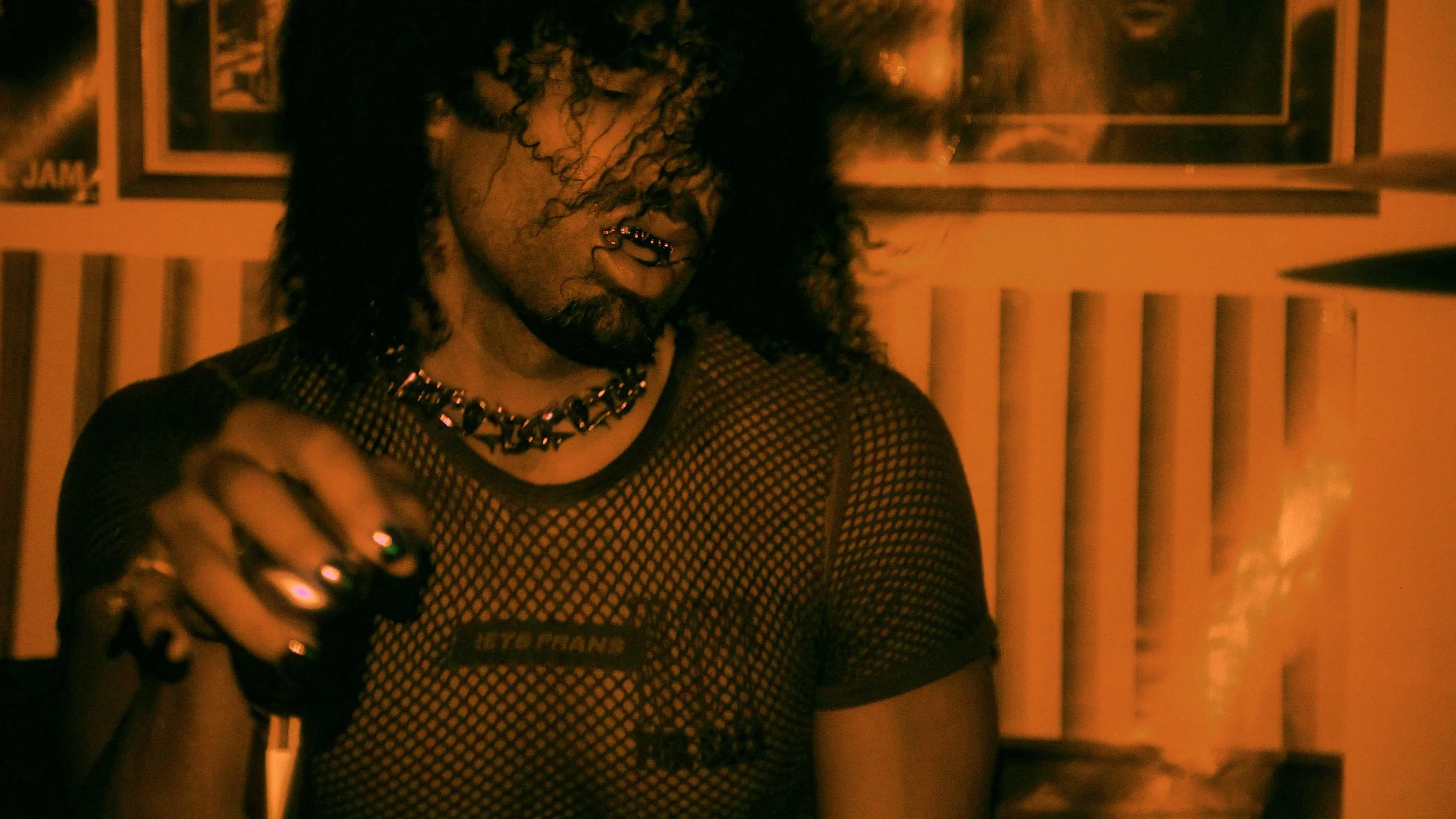
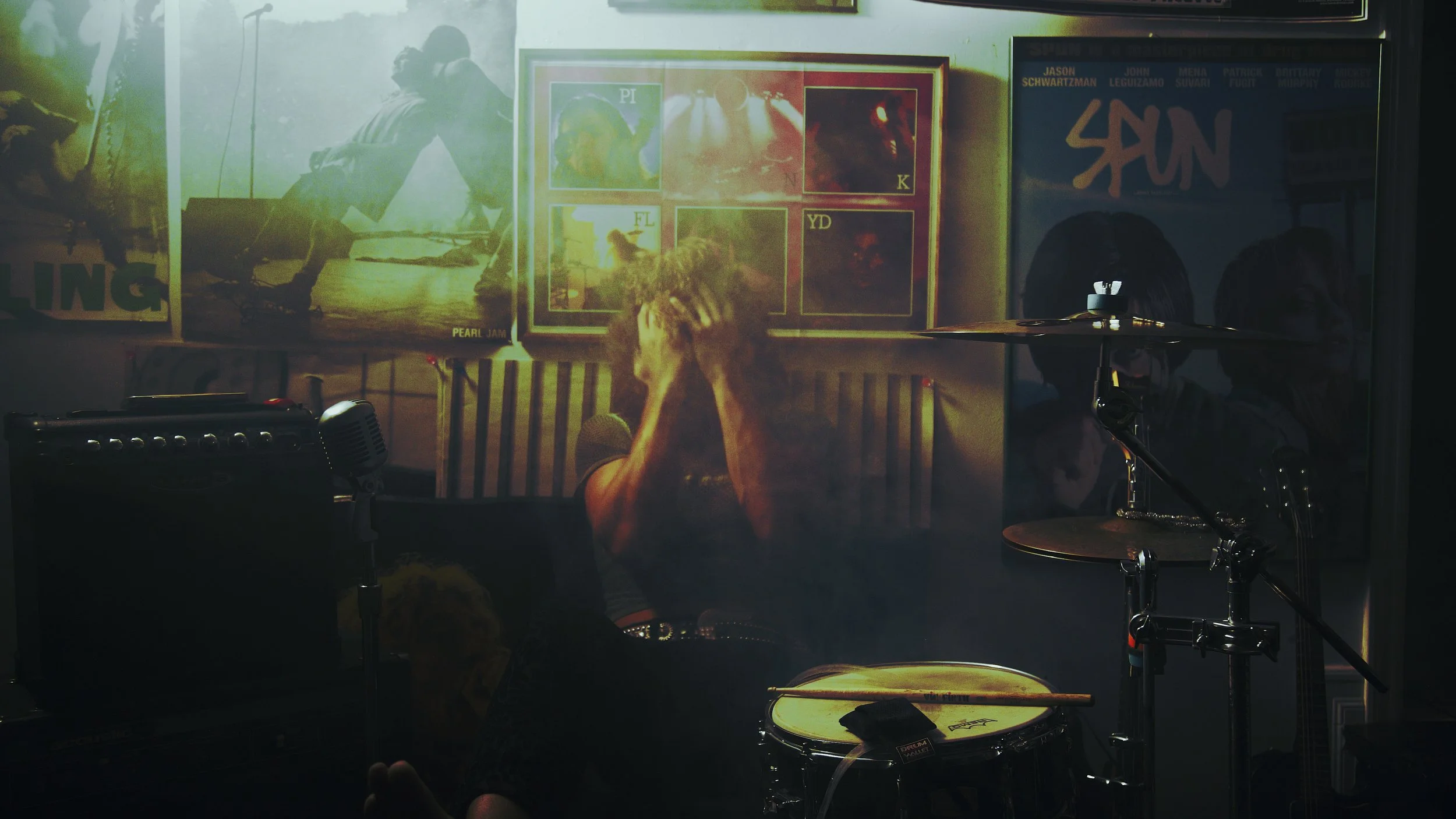
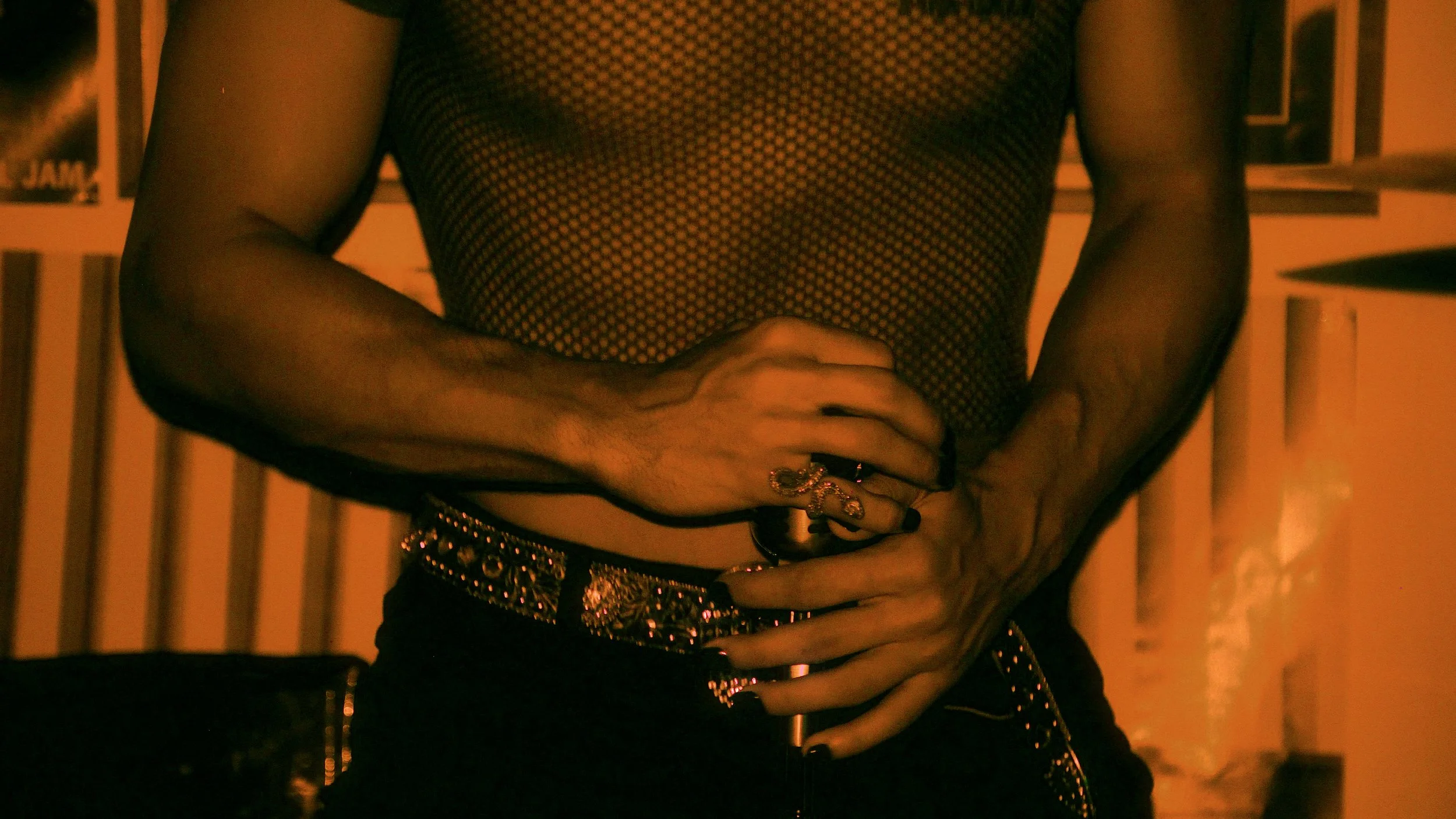
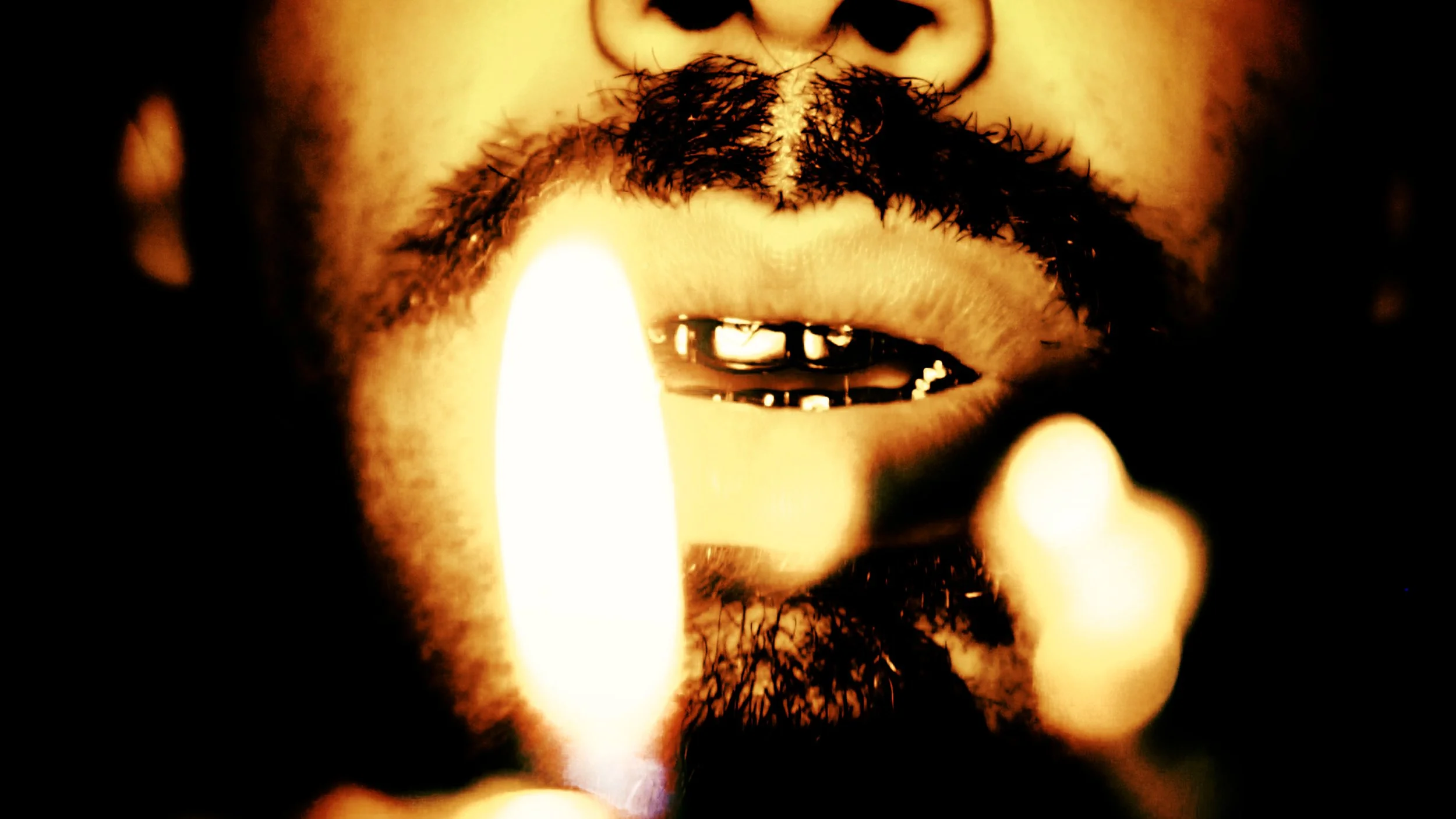
Honestly, the visual language for “BLAXXX SHEEP” came from going out and doing it, letting the art become what it was supposed to be. Rambo and I had spent that day shooting videos for “X-rated” and “Oxy” with our boy Damien, an amazing director and videographer. We had planned to shoot three videos and ran out of time. Later that night, I came home and thought, “Let me just create something.” We had set up Rambo’s drums in the living room to record, and the background was already there. That’s my house, my walls, the rock and roll posters of people I love and who influence me. I threw on a fit, made sure Not for Sale was seen, and went crazy. One camera, one light, a drum set and me. I played with warm light, flashing light and smoke, and let God handle the rest. My camera is old. I didn’t even have another screen to check the focus. I was trusting the eye God gave me. Rambo came out of his room and helped line up the final shot, where I sang the song fast so I could slow the footage down and catch the grills. From there, I called Nahuel and said, “I’ve got one light, one camera. It’s ready. I need to film you.” He plugged into the amp and went crazy. Ian was about to leave for the army, and we went to help him move. My camera was dead, so all I had was my iPhone. At his storage unit, the idea came to me: let’s film Ian being locked away like he’s the BLAXXX SHEEP. His energy, the grit in the way he plays bass, brought that scene to life. Then we set the drums up again and filmed Rambo letting loose. Even the colors revealed themselves through the process. Something would happen that looked like a mistake, and it would give me an idea. I feel like God puts those moments in my path, and what I thought was a mistake becomes a beautiful creation. The visuals grew out of our home, our energy, our lives. I didn’t have to explain every part of the story because we were already living inside the feeling. This whole creation was, and is, a blessing.
Your earlier profile connects psychedelic soundscapes with storytelling; can you choose one passage of “BLAXXX SHEEP” and explain how its sound serves what you are saying?
The psychedelic soundscapes have so much to do with the way Nahuel plays guitar. He has this old school, “I’m here” energy, like Guns N’ Roses, where the guitar is just screaming. At the same time, there’s a melodic, psychedelic world he creates through his patience, his understanding of the song and the way he sings through his guitar.
The passage that comes to mind is, “BLAXXX SHEEP, golden tiger of my eye, sweet soul and sweet desire takes me to a place much higher.” To me, that’s poetic and cinematic. The lyrics paint the story, and Nahuel’s guitar gives that story somewhere to travel. It feels like we’re following each other, his guitar singing alongside my voice, writing the story simultaneously.
Your official links include live versions of “Polaroid” and “Missed Call”; what have those performances taught you about bringing The Rainbows’ energy into a recording like “BLAXXX SHEEP”?
Those performances taught me so much because I’m still early in my life as a performer, and I’m playing with such great musicians. Their energy gets me so excited. It’s radiant, thrilling, thrashing, almost overwhelming. My instinct was to match that energy and then take it even higher, to give people something they would have to digest. Going into the studio, I learned there’s a fine line between performing and recording. A live performance is a moment you can’t reenact. A recording is something people are going to return to over and over again. I wanted to carry that same electricity into something clear and harmonic in its own dirty, gritty way. Something people could live with for years, a sound that would become nostalgic and never die out. Rambo always gives me honest feedback after our performances, and one thing we worked on was capturing more of my voice, more singing and less yelling. Having The Rainbows record while I sang allowed me to tap into their energy and find that balance. I could feel when to rise, when to pull back, when to let the sound carry me. I found my place as the next instrument in the song.
Your live links include a performance titled “BLAXXX SHEEP”; how does that performance relate to the forthcoming “BLAXXX SHEEP” release?
That live performance captures “BLAXXX SHEEP” still in the womb. We were experimenting, still discovering what it could become. We hadn’t recorded it yet, and honestly, we weren’t even thinking about recording it at that point.
The audio came straight from the camera, so it sounds more aggressive, and you don’t get to grasp the full beauty of what we were hearing. Visually, though, you can see the energy. You can feel what “BLAXXX SHEEP” brings into a room.
That performance is part of its becoming. When we took it into the studio, we gave it more shape and let all those details come through. What had lived as an experiment, as a jam between us, grew into a fully realized song.
Can you take us into the El Cid performance of “Missed Call” and describe a moment that captures how you and the band work together onstage?
“Missed Call” at El Cid was a coming of age moment for us. We had decided to remove some of the background vocals in the bridge and give more space to the instrumentation, to my voice being in key and in tune with what the band was creating. We were learning how to speed up and slow down together, how to feel each other. The whole song passed in what felt like a blink. The moment that stays with me is going into the crowd and simply singing, letting myself be at the same level as the people in front of me and hearing them cheer us on. From the floor, I could look up at my guys and make eye contact while they played. It’s rare that I get to share that kind of full eye contact with the band onstage. For that moment, I was in the crowd, looking up at The Rainbows, and we were still moving together. It was such a beautiful thing to share.
In a song your team describes as addressing family rejection, how did you decide what listeners needed to know and what you wanted to keep private?
I didn’t set boundaries in this song or decide ahead of time what listeners needed to know. I let the music and the lyrics tell us where we were going. I don’t want to put a boundary on sound. I believe it should be free and allow people to flow freely with it. There’s truth throughout the song, including stories I’ve heard that aren’t all personally about me. Those stories come together into a collage of emotions. Someone might find themselves in one part, and someone else might connect with another. There are different places to enter and recognize something of your own. That’s what makes “BLAXXX SHEEP” so special to me. I think there’s something everyone can identify with, even in the parts they may not want to recognize. It’s there. You can’t hide. It’s the truth.
Your earlier profile names Prince, Jimi Hendrix and Robert Plant; what specific performance or record from one of them helped you imagine the artist you wanted to become?
I never really imagined being an artist, or even being artistic or creative. I’ve just been living my life, discovering what’s inside of me as I go.
Jim Morrison was someone who really woke me up. He made me feel like it’s okay to fucking not know everything. You can go for it and figure it out along the way. Anthony Kiedis gave me something similar through his lyrics and his energy, especially his lyrics. He made me feel free to take something that might not make sense, find the sense it makes to me, and figure out how to articulate that feeling to someone else.
Art and the artists before my time are always resonating within me. I’m still figuring out what I’m becoming to this day. The only thing I know I want to become is as close to God as possible.
The Rainbows’ introduction emphasizes freedom and self-expression; what does that mean in the way you make space for each person in the band?
For me, freedom and self-expression begin with trust. Ideas flow both ways. Sometimes I bring something to them, and so often they bring something to me that I fall in love with. From there, we give each other the freedom to create. They’re such talented musicians, and they understand music in a whole different way than I do right now. I want each member to feel free to bring themselves into it and communicate with each other, creating something that resonates with all of us.
It’s become this beautiful exchange of everyone pushing each other toward a sound that’s clearer, fuller, more understood. Each person’s frequency gets to coexist with the others until it becomes one sound. “One band, one sound” is the ultimate goal, and that’s something I’ve learned from them. They say it all the time.
Everyone gets to put a strong piece of themselves into the music. We’ve anointed each other with that belief, that trust that what each person brings will serve the sound.
With “BLAXXX SHEEP” set for November 13, where do you want to take this story next, whether through another recording, a visual or a live performance?
“BLAXXX SHEEP” is a story that will always keep unfolding. This is just the beginning of the journey. Right now, the band and I are discovering which story wants to be told next, whether that’s “X-rated” or “Oxy.” What excites me is creating a new sound and allowing myself to hear what it’s revealing to us. My hope is that people can inherit the love, the energy and the gifts of The Rainbows, and carry something of that light into their own lives. I see it reaching different people, moving between lives that might never have crossed otherwise. Through these stories, everybody can find somebody to connect with. The sound brings us into the same room, and we recognize something in each other.
Xuavage Love on Instagram: https://www.instagram.com/xuavage_love/
We cover what moves us. Send what moves you.
Nefarious Supply has covered underground music independently since 2018. If you're making something you believe in, submit your music and tell us the story behind it. We'd love to hear it.
Selected artists may be considered for interviews, playlists, and editorial features. No fees. No pay-to-play. Ever. Submitting puts your work in front of us; it does not guarantee coverage.
Credits
Studio photos: Rob Gottenbos
Additional photos: Xuavage Love
BLAXXX SHEEP artwork: Xuavage Love
BLAXXX SHEEP trailer: directed, shot and edited by Xuavage Love
Song credits: produced by Xuavage Love, CampbellRambo (Daniel Campbell), Nahuel Franco and Ian McDaniel; written by Zachary Harris, Daniel Campbell, Nahuel Franco and Ian McDaniel; mixed by Karo Moralyan; mastered by Michael Mattice
Bibliography
Xuavage Love. Additional photographs; BLAXXX SHEEP cover artwork; BLAXXX SHEEP official trailer [Photographs; Artwork; Video].
Xuavage Love & The Rainbows. Official links and live performances.
Xuavage Love. Artist profile. UnitedMasters.