
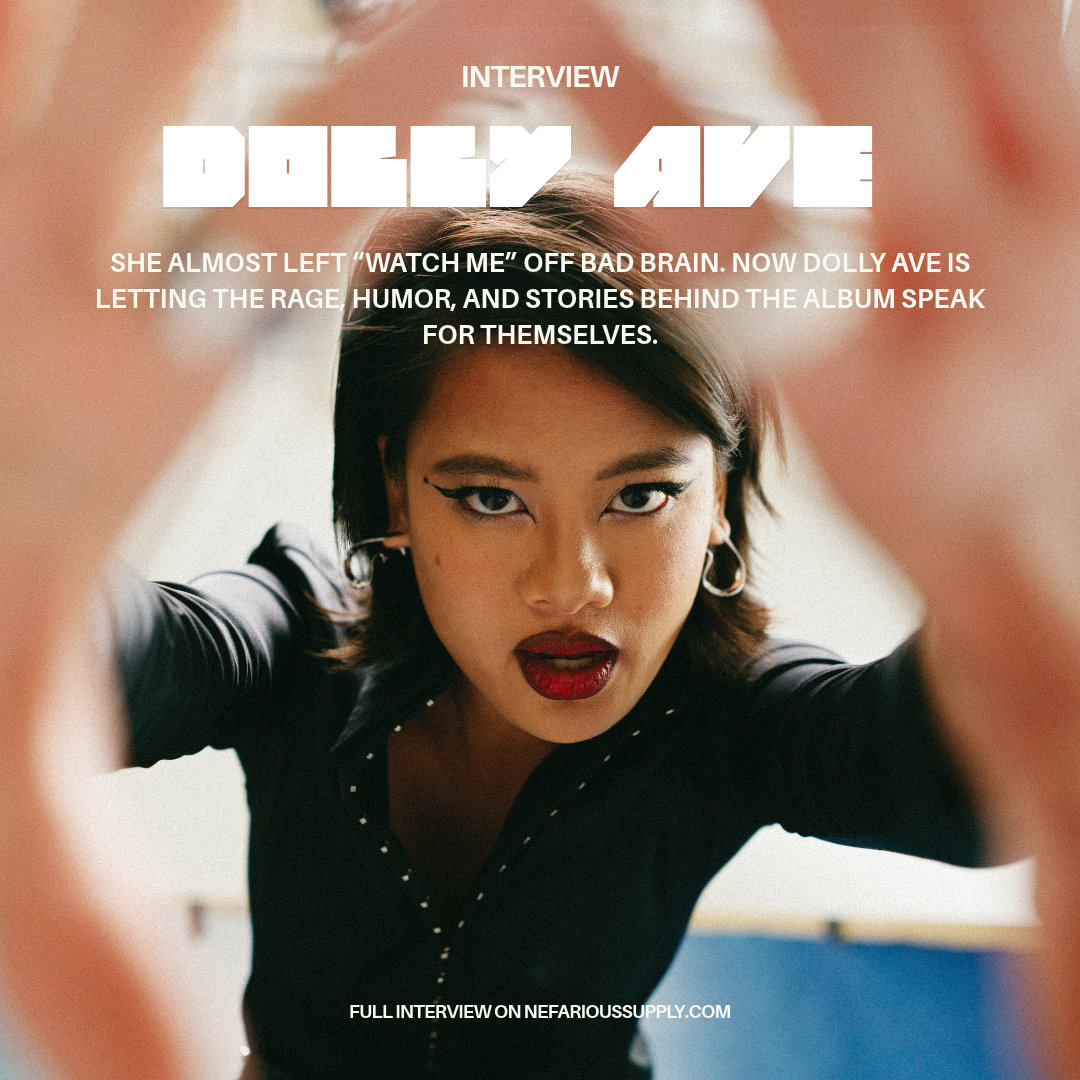
When Dolly Ave was recording “Watch Me,” Jake Magness encouraged her to scream the words. The exercise pushed her beyond her comfort zone, asking her to let go of the self-consciousness she can feel about her voice. She went back and forth on whether the song belonged on Bad Brain. Now, it’s one she enjoys performing for its rage and emotion.
That willingness to trust her instincts shaped more than one moment on the album. For the “Better Side” video, Dolly moved away from a larger, character-driven concept in favor of something simpler, giving the song’s message room to come through. She faced another decision when it came time to release Bad Brain: wait for a label or the right opportunity, or put out the work she had spent so much time bringing to life. She chose to release it independently.
In our conversation, Dolly takes us inside those decisions and the ideas behind the songs. She talks about finding humor in “Hot Garbage,” leaving space for play onstage, and ending the album with “All Mine,” a song that invites listeners to decide for themselves how its story fits together.
Before releasing Bad Brain, you told OnesToWatch that these songs landed between comfort in yourself and a more daring version of yourself. Which song took you furthest beyond what felt familiar, and what decision in making it helped you get there?
Watch Me took me the most out of my comfort zone. I remember being in the studio with Jake Magness and he told me to scream the words. It felt akin to a theater exercise of letting go of shame. While I'm a performer I can still get in my head about my voice. I went back and forth on whether to add this song to the album. It has quickly become a song that I enjoy performing because it's all about the rage and emotion.
You described “This Is Our Time” as an experiment that taught you what you disliked, and said learning to say no became part of making Bad Brain. Take us into one decision on this album where saying no clarified what you wanted, including what you chose to do instead.
In the past I would proceed with a certain creative direction even if I felt it was not the right fit, fearing deadlines and the need to be decisive. I think artists should be encouraged to feel confident in how they represent themselves. Although I may put a lot of effort into a song, album cover, design, or video, I learned to trust my instincts . I am allowed to change my mind to get the result that best translates the art , even if it may make the process take longer.
You told OtakuKart that you and Kevin Hissink are both vocal when a song is not quite there yet. Choose a moment from making “Better Side” when you had to work out what was missing: what did each of you hear, and how did you test the solution?
We recorded the whole scratch demo one day and when I returned to the studio another time I told him that I wasn't satisfied with one of the verses. He was open minded and allowed me the space to noodle and rearrange the melody which became what the song is!
For the “Better Side” video, you described drawing subtly on L from Death Note so viewers would not need to know the series to understand the song. Choose one visual decision that helped you strike that balance, and explain how you developed it with the people involved in the video.
The concept of the video was originally more character driven. I'd be in a wig with different colored hair, and the production scale would have been greater, including an entire action sequence - which I loved the vision for. However I ultimately landed on a more tonally simple concept because the song to me felt more grounded there. I didn't want the song's important message to be lost.
You described your voice on “Better Side” as restrained against more jarring instrumentation. What were you listening for when choosing the vocal take, and which moment best shows how you made the words carry weight without matching the instruments' intensity?
I am singing rather monotonously on purpose. I didn't feel the song needed a large belty chorus to get the message across. The instruments speak for themselves and I'd say it's even more noticeable near the end of the song where we have "sirens and choral" voices.
Your OnesToWatch interview quotes both “I’ll do it my own way” and “I’m deep under the spell and don’t want no help” from “This Spell.” How do those declarations relate to each other for you, and what choice in the writing or delivery helps us understand the person saying them?
This song doesn't come from the perspective of a single truth. I was dealing with many different frustrations and ultimately addressed them all with a firm "I can rely on myself, and therefore I'll choose to do things my own way."
In her review of Bad Brain for OnesToWatch, India McCarty quotes “a red flag waiting to happen” from “Hot Garbage.” Where does that line sit for you between self-criticism and bravado, and how did you find a delivery that made its meaning clear without explaining the joke?
I think we can take ourselves too seriously. Laughing at ourselves is still a vulnerable and brave decision because it's an admission that we are human and make mistakes. The joke is there isn't a joke. I am all of these things and you have baggage too. It's relatable, which makes it funny.
McCarty also quotes “I could leave, but I refuse” and “if I did, would someone know?” from “Party Never Ends.” What situation were you writing from or imagining, and how did you decide which details the listener needed and which could remain unspoken?
No matter what party you've gone to—whether a house party, college party, birthday party, or family function—there is always a point where you're waiting in line for the bathroom. In some ways that's where you reflect on how you're feeling about the night and where you're at. That's where the starting point of this song came to mind. I'm not sure when I decide a line is not necessary. It's just a feeling!
Bad Brain closes with “All Mine,” where, as McCarty notes, you sing “Every song I sing is about you.” How did that song become the closer, and what did you want its final impression to leave unresolved or make clearer about the album?
I t was one of the last songs I wrote for the album as well. I didn't quite feel this song should be in the beginning or the middle. It felt both separate from and a part of the album. I ultimately decided to leave the album on a playful note. The audience can debate whether the entire album is based off of one person, or if the lack of closure might foreshadow more context in the future.
In the submission you sent us, you wrote about making space for loud, emotionally raw work as a Vietnamese-American woman. Which choice on Bad Brain best represents what that freedom means to you in practice, and what helped you trust it?
The choice to create and release the album without necessary backing best represents that freedom. This album took a lot of work, time, and love as an independent artist. You can imagine the deliberation I had about waiting for a label or the right timing and opportunity to release it. That is a decision many artists make, especially artists of color because making one is so hard to make come to life in the first place. The album did release even though I could've held onto it for years. I believe every story needs to be heard. So let it out. It'll find its way to the right people or opportunity and that's only possible if it's out there for anyone to find.
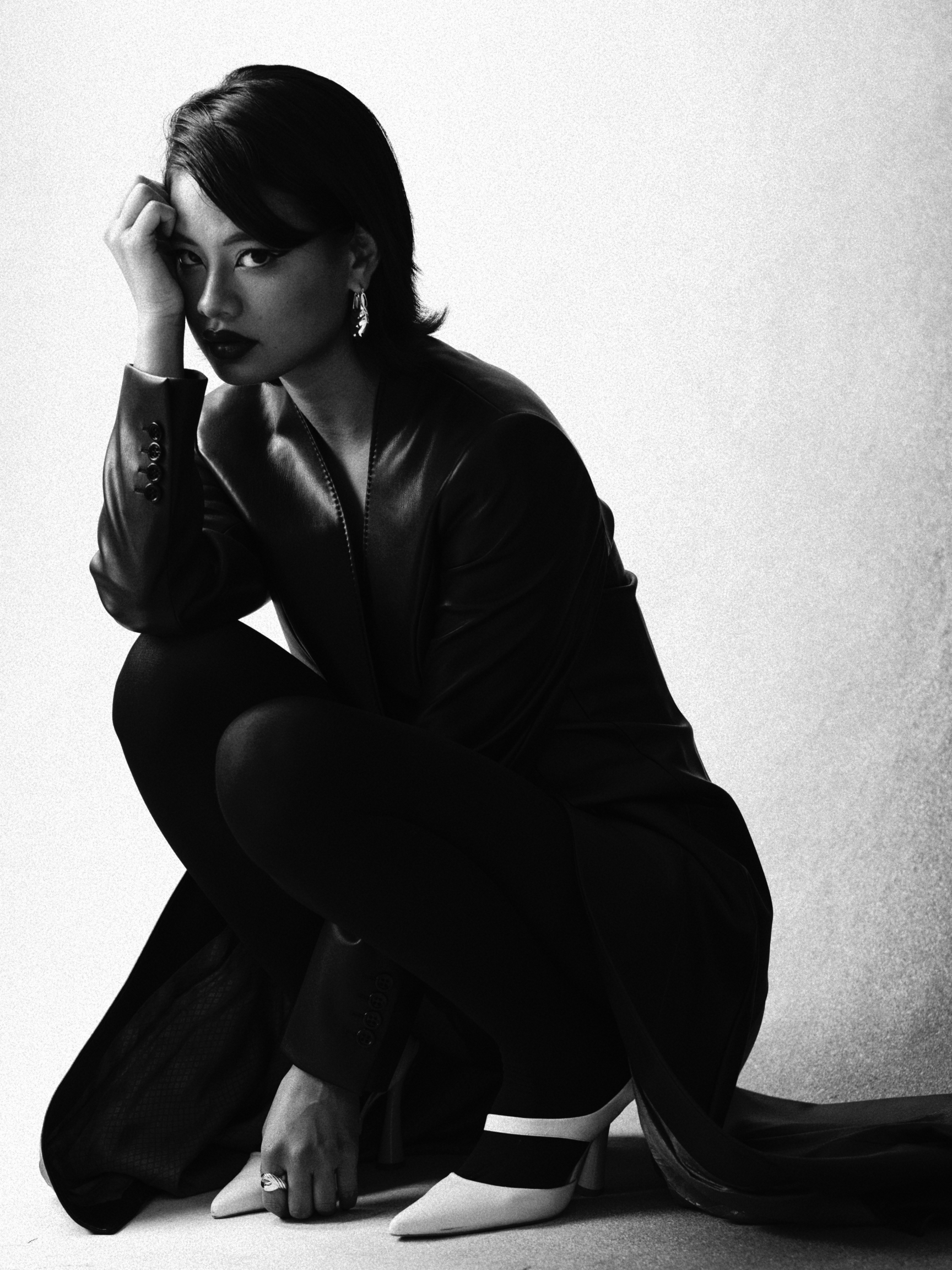
You told OtakuKart that working with MIYAVI taught you to make room for humor, joy, and costuming. Taking one Bad Brain song as an example, how do you decide where that playfulness belongs in a performance and where you want to let the song stand without it?
P arty Never Ends is a good example. At a show I let go of some of the lyrics to make room for performance, head banging, chaos. When I return to the verse live I bring the focus back to the song. There's not really a right or wrong way to approach the songs live. Live shows just allow me the freedom to make choices that may surprise you, the band, and the audience.
You have described This Is Our Time through grief and coming of age, and Bad Brain through frustration with yourself, relationships, and the industry. What would you like to explore beyond those accounts of your life, and is there an unfinished idea, musical or otherwise, that gives you a place to begin?
I'd love to explore being more direct about a moment in my life through song. My songs at the moment are still specific and vulnerable and true to me but I'd love to paint the picture more clearly and pull off a bit of that protective layer of privacy I give myself.
Thank you to Dolly Ave for sharing the decisions, doubts, and discoveries behind Bad Brain. From finding the freedom to scream on “Watch Me” to choosing to release the album independently, her story is a reminder that trusting your vision can mean changing your mind, making space for every emotion, and letting the work reach people rather than waiting indefinitely for the perfect moment.
Listen to Bad Brain and keep up with Dolly Ave.
We cover what moves us. Send what moves you.
Nefarious Supply has covered underground music independently since 2018. If you’re making something you believe in, submit your music and tell us the story behind it. We’d love to hear it.
Selected artists may be considered for interviews, playlists, and editorial features. No fees. No pay-to-play. Submitting your work does not guarantee coverage.
Credits
Press photos: Bryan Allen Lamb
Sources
McCarty, India. Dolly Ave Is Betting On Herself. OnesToWatch.
Oneal, Justin. Dolly Ave Explains How Death Note Inspired “Better Side”. OtakuKart.
McCarty, India. Dolly Ave Lets Listeners Inside Her “Bad Brain” With New Album. OnesToWatch.
In Conversation: Wallice and Dolly Ave. OnesToWatch.