
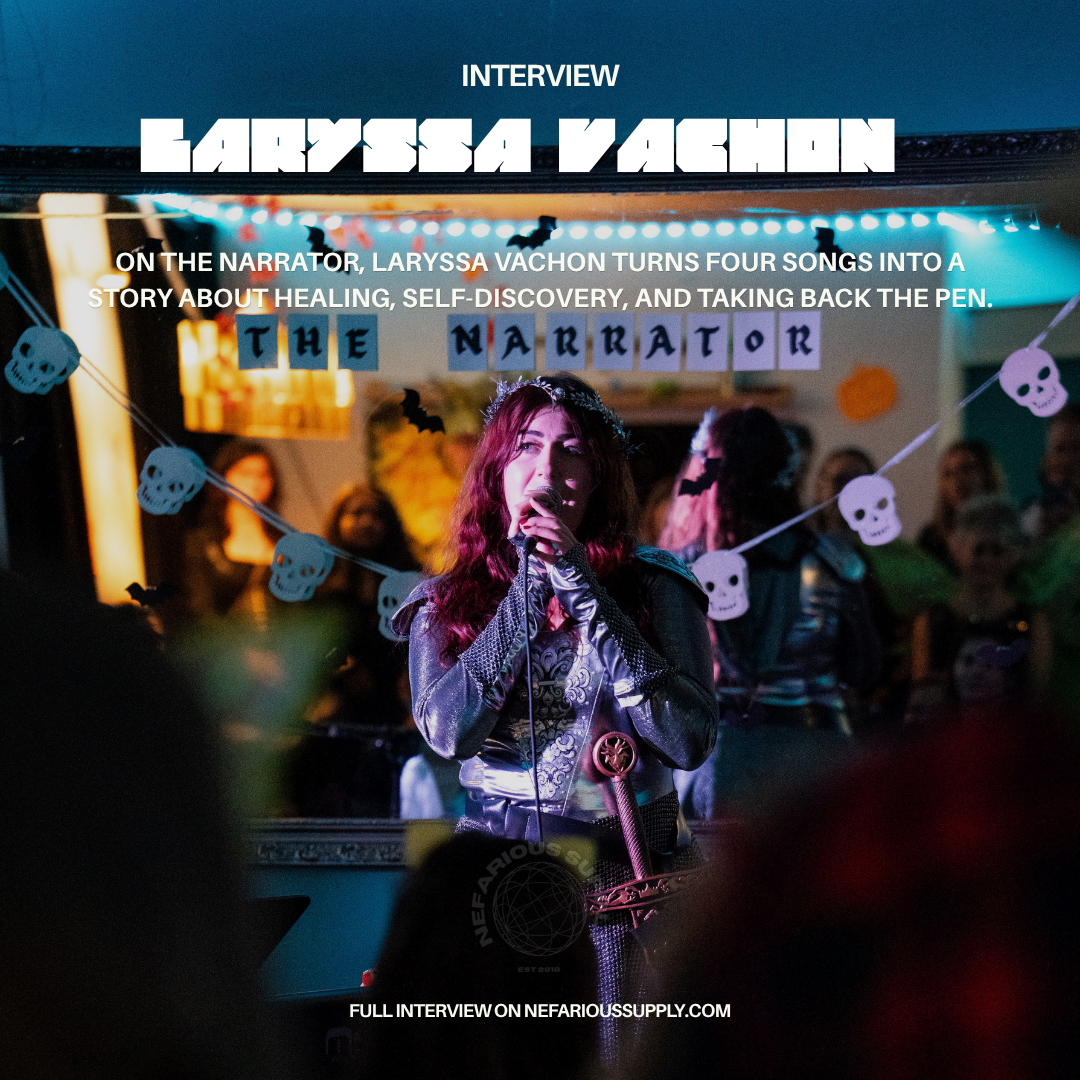
For years, Laryssa Vachon wrote songs she never intended anyone else to hear. Songwriting gave her a way to process emotions she struggled to put into words, until sharing her music began to open doors she hadn't expected.
On her debut EP, The Narrator, the Vancouver singer-songwriter turns that private practice into a four-song story about healing. Released October 2, the project moves from the uncertainty of “Driver's Seat” through the romantic disappointment of “Never Broken a Bone” and the accountability of “Self-Sabotage,” before its title track arrives at a question: “What if this is the chapter where it all goes right?”
In our conversation, Vachon discusses the narratives she learned to question, the classical training behind her layered harmonies, and the freedom she found in making music on her own terms.
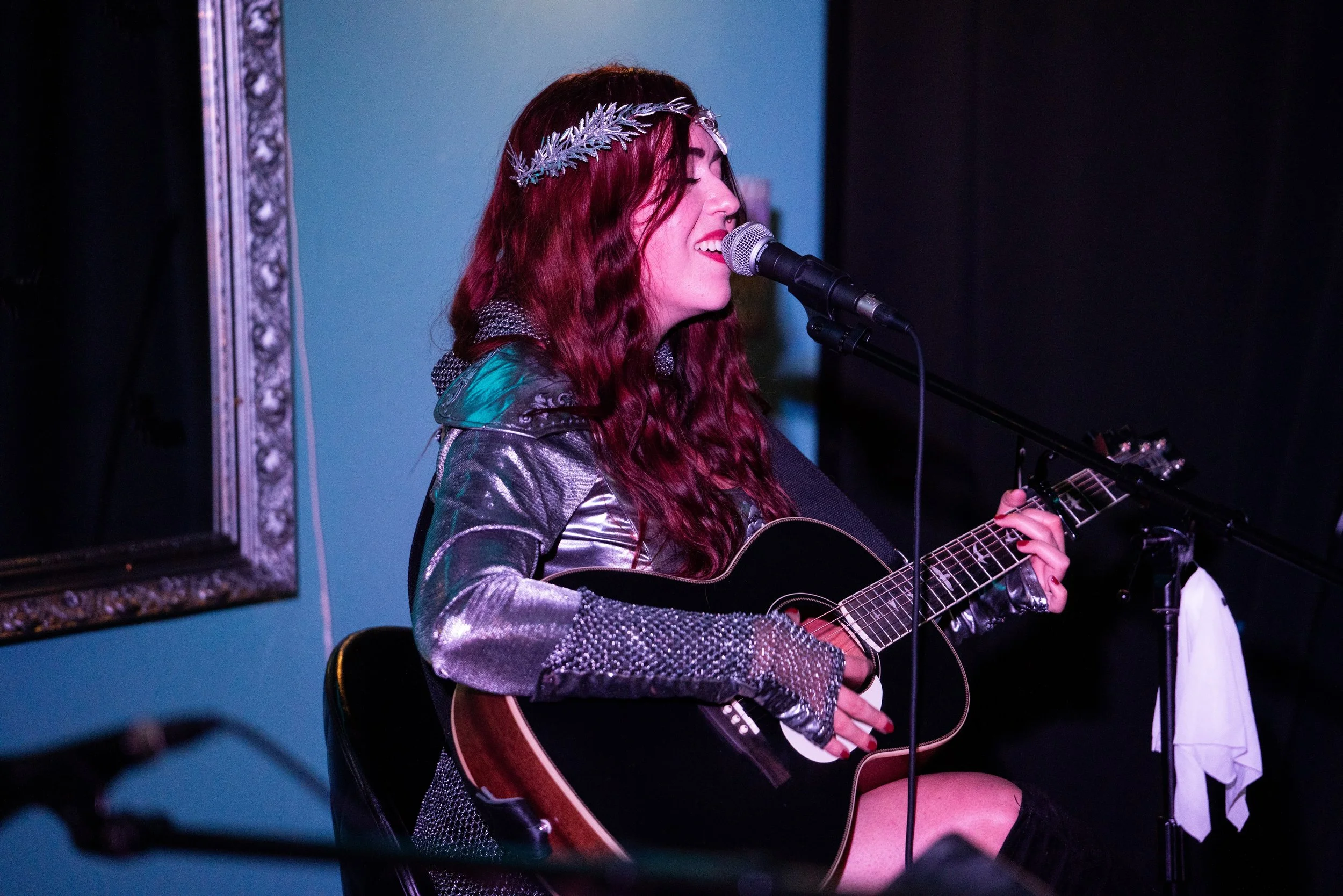
You asked us to hear The Narrator in order; what journey did you want these four songs to make possible that listening to them separately would miss?
I love each song on their own and each narrative deserves its moment to shine no matter when or how anyone listens to it. But as a concept album, The Narrator is designed to tell a chronological story of healing, which is why I always suggest listening that way first.
The first song, "Driver's Seat," is about my imposter syndrome as an artist in the music industry, so I knew from the very beginning that the EP was going to start with that one. It's about a journey and not really knowing where I'm going, but getting in the car and going anyways.
"Never Broken a Bone" is about being unlucky in romantic love and "Self-Sabotage" is about the bad decisions I've made in the search for it. I think "Self-Sabotage" hits more after "Never Broken a Bone" because it gives it a deeper context as to why I do the things I do.
The same way I knew I wanted to start with "Driver's Seat," I also knew I wanted to end with "The Narrator." I wanted to write a song about taking back power and rewriting my story - changing all those narratives about why I believe I'm not good enough and instead, asking myself: "What if this is the chapter where it all goes right?"
I love "The Narrator" as a song on its own, but to me its meaning hits way harder after listening to the other three before it. And I hope it leaves people feeling hopeful and empowered.
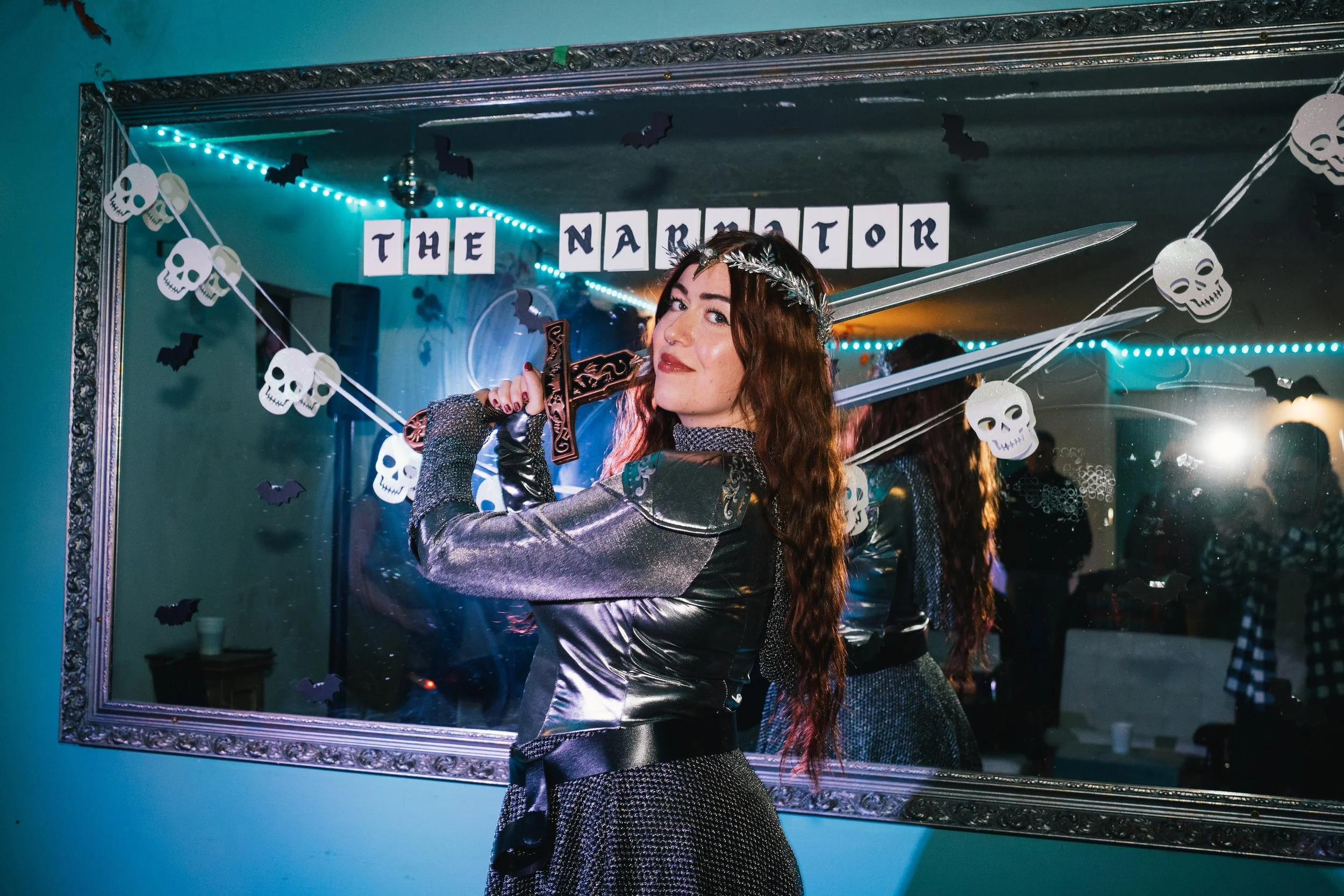
Your submission describes stories you have told yourself that shaped your life; when did you recognize that those stories, rather than only the events behind them, were the subject of this EP?
I've been seeing the same therapist for the last five years, and one thing she always brings up are narratives. A lot of the problems I have talked about have more to do with the narratives I've told myself than the actual event itself. Because this is something I've been working through for a while, I thought it would be a great concept to work through musically. I just kind of woke up one morning and decided it was time to really heal this part of myself if anything was ever going to change.
You wrote privately for years before releasing "Lie to Me"; what changed when you began deciding which parts of your inner life you wanted listeners to encounter?
For the longest time, I wrote songs because it was the only way I knew how to process emotions I couldn't otherwise find the words for. It allowed me to connect with my subconscious and learn to understand what I was feeling and why I was feeling it. Because of that, I always planned on them being just for me. I also know that the people I write about have their own lives and perspectives and I was worried something I wrote could hurt them in some way without me meaning to. Until I realized that the people whose feelings I was protecting didn't care about mine at all. So, after I wrote "Lie to Me," I was just like screw it, I'll post it and just see what happens. That one video opened so many doors for me. It led to me getting my first song produced, and it allowed other artists across the world to find my voice and reach out for collaborations.
Each time I have shared my inner life with the rest of the world, I've become more and more myself. It's terrifying and most times I get really scared to put myself out there in that way. But every time one person reaches out to me to tell me they loved it, or that they relate to it and feel less alone in the world - that's enough. Moments like those will always be enough to keep me going.
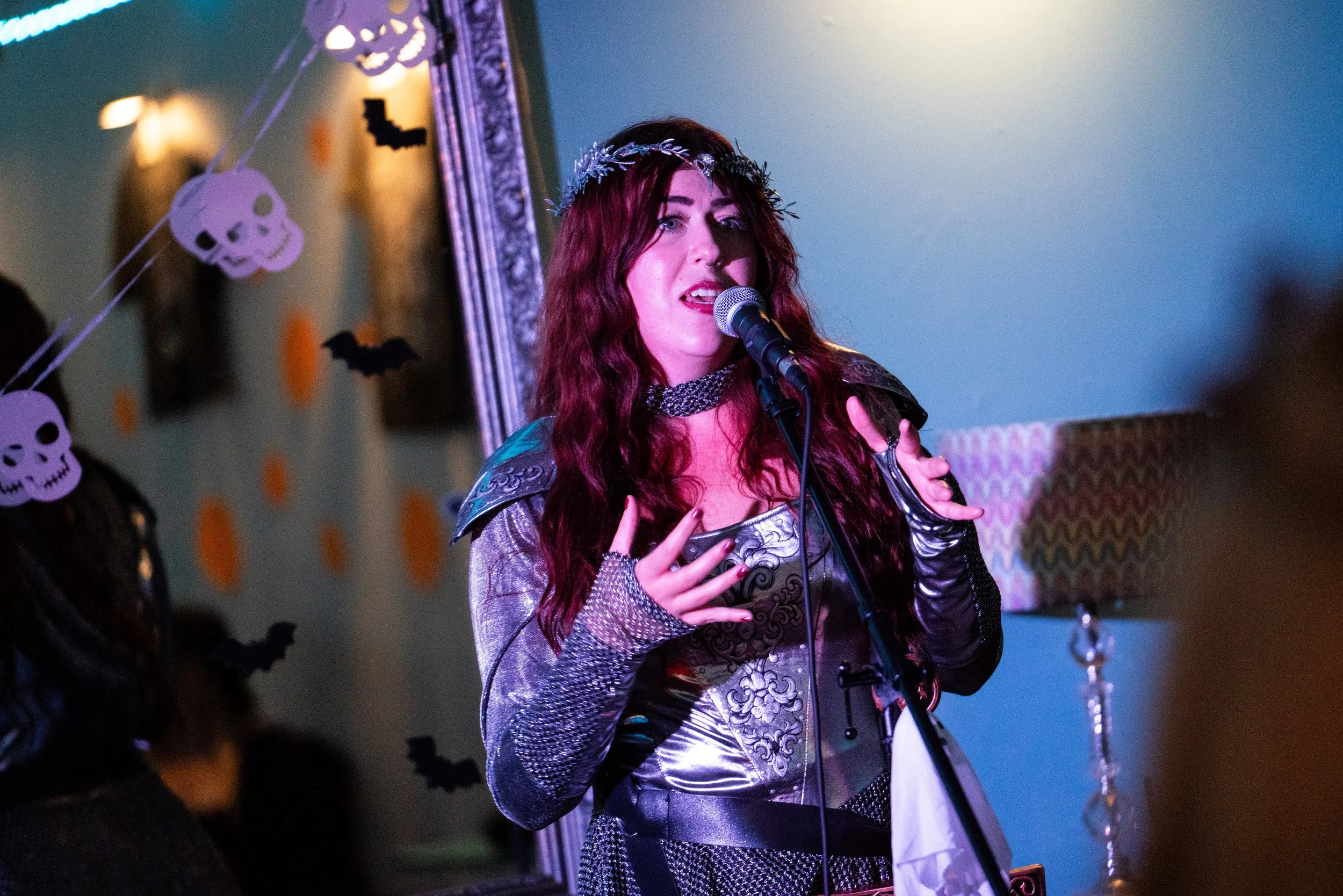
After twelve years of classical vocal training, which habit proved most useful on The Narrator, and how can we hear it in a particular performance?
It's so interesting to me because I don't find myself consciously relying on my classical training when I write. Where I do see it show up, and where I am very grateful for it, is during the background vocals stage of recording. When I was heavily involved in the classical world as a teen, I would harmonize to every pop song on the radio just because I thought it was fun. I would say that habit has been the most useful especially to The Narrator because harmonies come easy to me, and I also like to spend time creating challenging ones that listeners might not expect (shout out to music theory). Each song has SO many layers of harmonies and background vocal sounds that I'm really proud of. Classical training has given me a vocal range that allows me to sing almost every note we need, and it's honestly my favourite part of recording - seeing all of that come together.
"Easy" and "Seven" credit Shane Stephenson for production and mixing; what did working on those singles teach you about communicating what you want from an arrangement?
I love Shane! He is also the producer and mixer of my EP and I am so grateful and lucky to get to work with him.
I worked on "Easy" and "Seven" a couple years before I started recording The Narrator, and it was really nice to have that experience. Those two songs were the first time that I didn't go in trying to be anyone else other than myself. In the past, there were artists I would try so hard to sound like because I didn't quite know my musical identity yet without latching on to someone else's. But with those two songs, I didn't have any goal in mind other than to create something I loved. I still went in with some production references of songs I liked as I do with every song, but we just kept adding things we thought sounded cool. Sometimes, it's absolute chaos in the best way. One "shaker" sound was actually a bottle of the SSRIs I was on at the time, I'd be yelling from different corners in the room to add different background vocal layers, and the second verse of "Easy" even has my cat Cosmo's meow.
When it comes to communicating about what I want from an arrangement, I think it's just really important to work with someone who values your opinion and can provide feedback in the way that makes the song better. I've been lucky to find that safe creative space with Shane and am so proud of what we created.
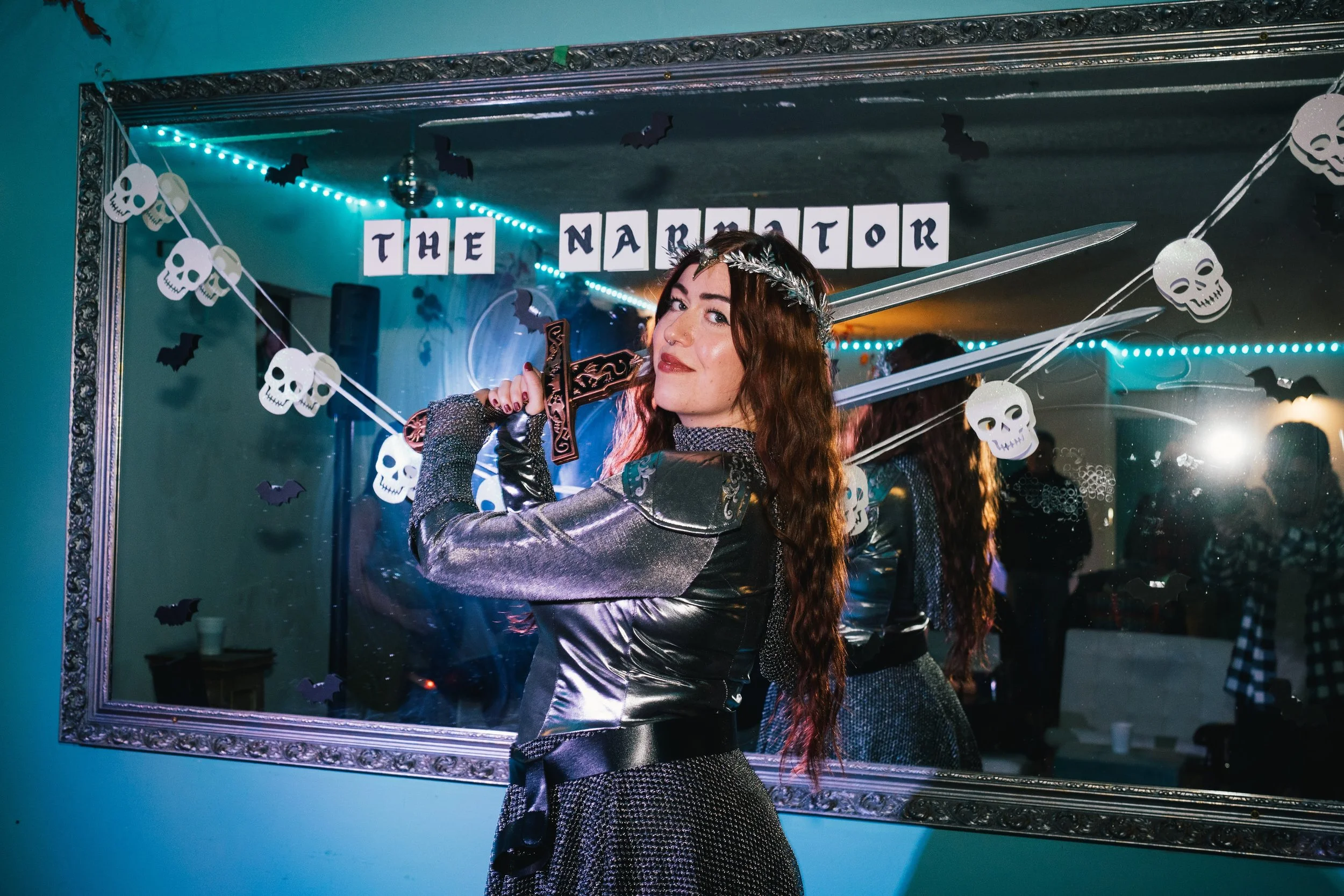
What connection between the opening "Driver's Seat" and closing "The Narrator" mattered most when you settled the running order?
"Driver's Seat" is about choosing to go on a journey anyways, despite feeling like a lot of people may not believe I'll make it to my destination. "The Narrator" says, actually, I can make it and I will.
"Driver's Seat" is being so overwhelmed with how others see me that it's held me back from living my life and shining to the fullest. "The Narrator" is about taking back control of the story without the noise of what others say or think. It says my story is my own, and only I have the power to say who I am and where I go from here.
What first gave you the phrase "Never Broken a Bone," and how did its meaning develop as you wrote the song?
I first heard of the "Never Broken a Bone" theory from a series of Tiktok videos. It describes this theory that people who are really unlucky in love have never broken a bone. I related to this strongly because 1) I have been unlucky in romantic love, and 2) I have also never broken a bone. It's like a consolation prize for not ever getting to experience a part of life that so many people promise you'll have when growing up.
I wrote it in September 2025 after reflecting on someone I was in love with the year before. I convinced myself that I may never have the chance to love someone like that again or be loved back in a way that I deserve. The following Halloween, I was out with someone I had a crush on, tripped, and hurt my foot really bad. When I couldn't walk and thought it might be broken, I had this epiphany that maybe I broke my foot with him there because he was supposed to be my person. I mean, how perfect would that have been if that were the case?
But he was definitely not my person. The break was just a sprain.
What did the title "Self-Sabotage" mean to you when you began writing, and how did you decide whose perspective the song should inhabit?
"Self-Sabotage" may be the most self-aware song I've ever written. I've always been so fascinated by romantic love and done a lot of questionable things in the search for it. So, for this song, I wanted to write about a certain experience in a way that took accountability for my own doing instead of villainizing the person it was about.
It was really refreshing to write from that perspective. There are so many different narratives and views on a situation, and I have the ability to empathize with so many of them even when I'm the one who's hurting. In this case, I knew I wanted to write about the bad habit of my specific form of self-sabotage instead of the actual person. By doing it that way, I wanted to break away from the narrative that those kinds of connections are all I'm ever going to have.
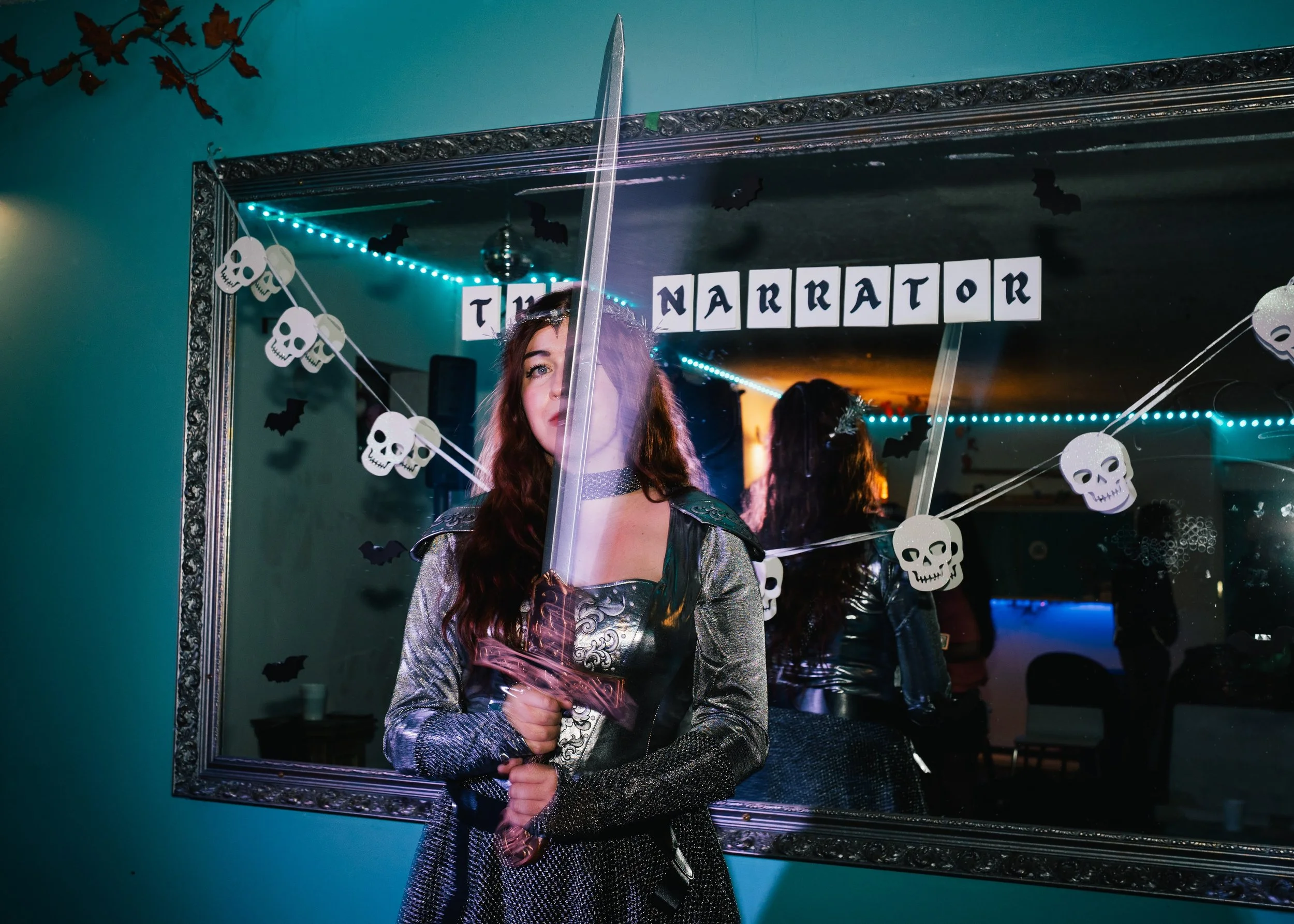
You describe the EP as ending with a decision to rewrite the narrative; which detail in the closing title track makes that decision feel believable to you?
There are so many details in "The Narrator" that stand out to me. For almost an entire year before writing it, I had this line playing over and over again in my head that said: "The love will come back to me." I just knew I wanted to fit it into the EP somehow. After multiple rewrites of the title track, that line became such an important part of the overall message. I also really love the line: "It's an enemies to lovers story, the relationship with myself."
But one line that really stands out to me when I think about the overall message of The Narrator is one in the pre chorus. The first pre chorus sings, "I'll take the knife from my back, turn it into a pen," which I wrote about people who've let me down. In the second pre chorus, I change that to, "I'll take the knife from my hands, turn it into a pen." For me, it's about the act of self-harm in the form of the stories I've told myself. The knife is the words and beliefs and self-sabotaging habits that have held me back for so long. The pen is how I am going to move forward and create a better life for myself.
Your background includes journalism and full-time communications work; what happens to your relationship with language when you sit down to write a song like "The Narrator"?
I grew up watching MTV and Much Music every day after school and wanted nothing more than to be one of the hosts. By the time I went to journalism school, so much about the industry changed, but my reason for wanting to do it in the first place never did. I've always been passionate about honest, emotional storytelling in every part of my life. Whether I'm pitching a story for news, profiling a person's life in my communications work, or writing a song - my relationship with language has been based on my values of vulnerability and connection.
When writing "The Narrator," I channelled those values heavily. The song is about a time in my life when I was very clinically depressed and let down by a lot of people I really loved and cared about - in friendships, romance, and even work. I felt really misunderstood, and wanted nothing more than for someone to just talk to me and really listen. So, writing "The Narrator" allowed me to work through that. I figured if they won't listen to my perspective, then I'll force them to with a song. In return, I got one of my favourite songs I've written and the whole theme of my EP, which I am so grateful for. If it wasn't for that one shitty year, who knows if I would have ever released an EP!?
You also work as a vocalist on EDM collaborations; what has moving between those sessions and your own songs taught you about the voice you want listeners to recognize as yours?
I'm really grateful for the opportunities and connections that collaborating on EDM songs has given me. I've always considered myself as more of a writer than a musician, so having a melody to write lyrics and melodies over is such an accessible way for me to create a song. There's this ongoing argument between songwriters on whether we write music or words first, and I am definitely a words first kinda gal.
But, I do feel more connected to my own music and wish people saw those first when visiting my music pages. Those are the songs where I feel like my voice is most my own.
With EDM tracks, the words and melodies are mine, but I don't have a final say in the sound because that's the call of the main artist. With my own music, I have a say in everything from the very beginning and am a much bigger part of the composition.
At the end of the day, people are going to listen to what they like best and I am very grateful they are listening in the first place. But I just hope they give my own independently released music the listening chance it deserves.
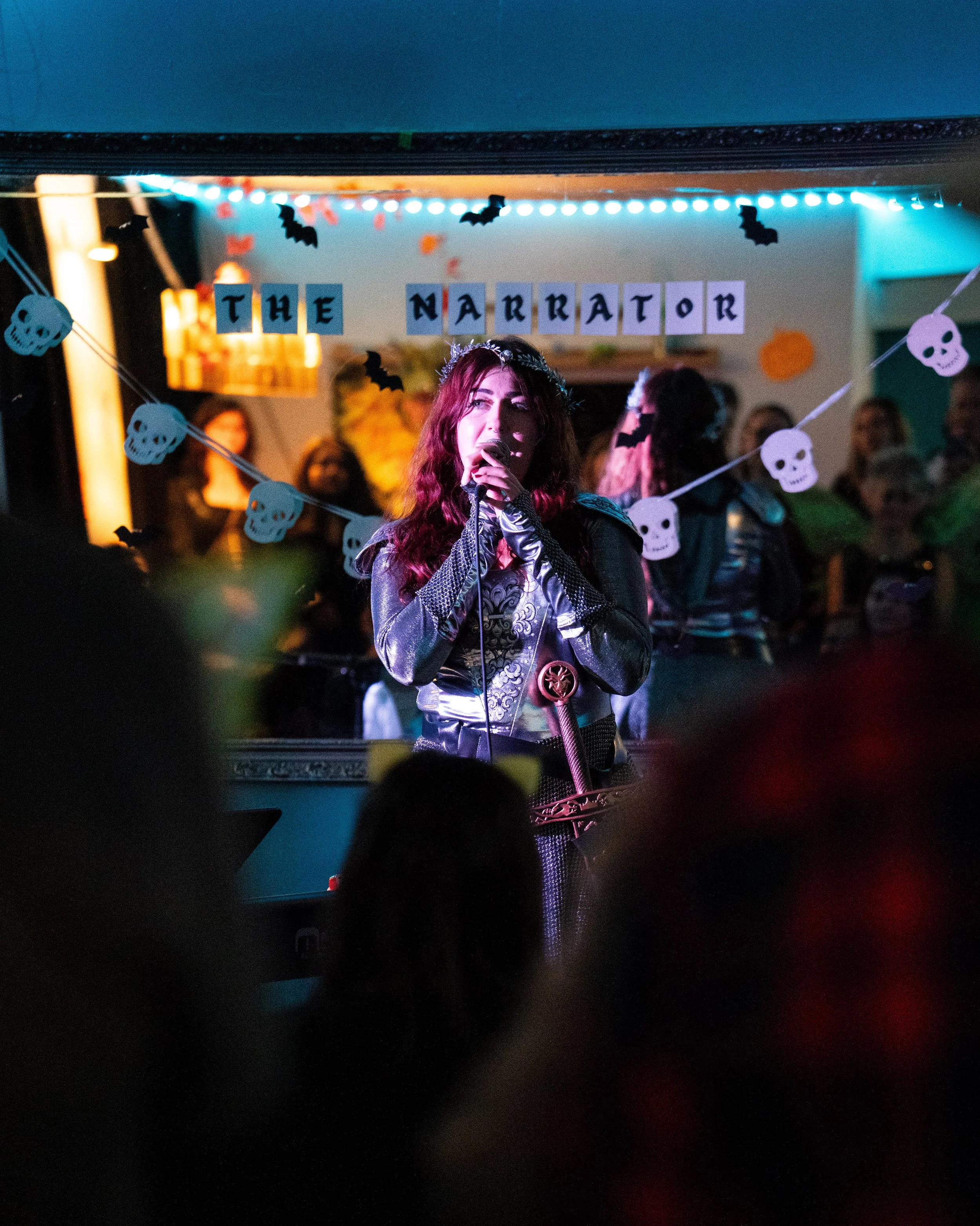
After making a first EP about reconsidering the stories you tell yourself, what are you carrying into the next chapter of your writing?
Writing this EP was such an important part of my growth and something I've felt like I needed to do for a long time. Many of the events these stories were written about would clog my subconscious and often be what spun around in my head when I couldn't fall asleep at night. Now, it feels like I can finally let them go. The first line in the chorus of "The Narrator", and the theme of much of my marketing for the EP, is: "What if this is the chapter where it all goes right?" And since manifesting that for myself, so many things have been going well.
Now that I am able to let go of these old stories and narratives, I am hoping to write about all the other things in my life. I am passionate about travel and art and science. I love hanging out with my friends and exploring nature in the outdoors. I care about what's going on in the world and doing what I can to create a better future for people and the environment. I want to write metaphors and melodies about all those things and how they make me feel.
The things that used to matter so much to me before writing this EP just aren't a priority anymore for who I am now. I'm excited to see what this new perspective brings - in both music and life.
Listen to The Narrator: https://open.spotify.com/album/2AqQ87lsXIP9xV8e2lkP7s
Laryssa Vachon on Instagram: https://www.instagram.com/laryberries/
We cover what moves us. Send what moves you.
Nefarious Supply has covered underground music independently since 2018. If you're making something you believe in, submit your music and tell us the story behind it. We'd love to hear it.
Selected artists may be considered for interviews, playlists, and editorial features. No fees. No pay-to-play. Ever. Submitting puts your work in front of us; it does not guarantee coverage.
Bibliography
Album photos: Laryssa Vachon
EP show photos: Rei Ikeda (@rei.g.ikeda)
The Narrator artwork: Laryssa Vachon