
Pat Williams does not make music that sits still. The Toronto artist builds alt hip hop and R&B out of live instrumentation, jazz fusion, and electronic production, chasing what he describes as an all encompassing sonic experience unbound by classification. Since IN CASE I DON'T SEE YOU found an organic audience in 2021, he has been quietly assembling his debut album, THE KIDS WILL BE FINE, while sharpening a writing practice built on duality: ego and sensitivity, devotion and detachment, what we think versus what we actually say out loud.
He writes about love, social norms, anxieties, and the contradictions living inside all of them, usually from the position that there are more than two sides to any story. The songs reflect that. Lush arrangements sit next to chaotic environments, playful wordplay carries heavier messaging, and the production is treated less like a backdrop and more like a second voice in the room. It is a method built on tearing things down and rebuilding them until the feeling is right, which is part of why the album has taken the time it has taken.
It is also why the reach has been quietly wide. Without a traditional infrastructure behind him, he has built listener pockets in cities like Johannesburg, Lagos, Los Angeles, and London, an early sign of what happens when an artist commits to the work instead of the lane.
In this conversation, he walks through his process and how it keeps shifting session to session, the long and unexpected road behind his newest song "Tongue Tied," the perspective he wrote from that he did not fully agree with, what Toronto put in his instincts and what he pushes against, his thinking on live performance versus theatrics, and what the word "fine" actually means to him in 2026. It is a talk about craft, restraint, evolving belief systems, and the difference between making noise and making meaning.
Your bio frames your mission as an “all encompassing sonic experience unbound by classification.” What specific experience are you trying to recreate—like if your music were a two hour film, what are the scenes you want people to pass through?
I’ve always aimed to document the specifics in life, the intimate moments. If the music is the vehicle to do that, it must be unbound and vast in order to portray those human experiences. Take a look at “Everything Everywhere All at Once” for example. The film had so much to say and used everything to articulate that. That being said, the moment people most remember is the husband admitting the “in another life, laundry and taxes” line. Everything surrounding it to me was the chaos and the set up for that line.
When you say “unbound by classification,” what are the classifications you’ve felt pressured by—genre, mood, audience expectations, industry lanes—and how do you actively resist them while still keeping a clear identity?
Not to say I haven’t had my fair share of growing pains during my career, but these days I truly don’t feel pressured by anything outside. It was absolute purity when I first started and sure I’ve had some ebbs and flows, but truthfully I haven’t ever gravitated or committed to anything that feels unnatural or will take me out of my expression. The games aren’t for me and neither are tainting my expression. That’ll only water down what I have to give. I go towards what feels right and I’m mindful of what doesn’t. I’ll cut that cord quickly. That applies to anything in my life.
You blend alt hip hop and R&B through live instrumentation, jazz fusion, and electronic production. What’s the order of operations in your process—do you start with chords, drums, bass movement, a sample or texture, or a lyrical idea—and how has that changed over the past year?
The process has adapted so many times that now, it all depends on what’s being heard and felt in the room. Sometimes the music will prompt the feeling, sometimes the music needs to be catered to the feeling. It’s usually the latter. Admittedly it takes a lot for me to really engage, that’s what happens after penning thousands of verses. I could write another verse, but these days my desire is to challenge and grow with both myself and the listener.
What’s one production choice you make that most listeners might not consciously notice, but that’s doing heavy emotional work in your songs—space, distortion, swing, vocal stacking, room tone, etc.?
The heavy lifting is in the process and how meticulous I create. I know that’s very general, but my choice is often to use math to create the magic. To reinvent, strip down and build back up again. The upcoming album’s a testament to that. It has to equate to feeling and message, however we get to that is truly never linear or anything in particular - that’s what keeps it interesting.
You write about love, social norms, anxieties, and their dualities. What’s a duality you’re obsessed with right now—devotion vs detachment, confidence vs doubt, freedom vs responsibility—and how does it show up in both lyrics and sound design?
I don’t think any one person is typecast or singular in how they move in the world. That’s why I enjoy showing that duality - I can show my ego and sensitivity within the same song, I can be derogatory as much as I can be a good man. One doesn’t negate the other, I think both exist for everybody on varying levels. It’s all intended to be as pure and free as possible, lead by example and create a space or conversation for those that feel the same - whether it’s in the feeling or the message.
You’ve said there are “more than two sides to any story,” expressed through sound design and conversation. What’s a moment where you intentionally wrote from a perspective you didn’t fully agree with, just to tell the truth more completely?
If I’m referencing my catalogue that’s out, it’d be PRIDE off of the IN CASE I DONT SEE YOU ep. I wrote about a situation between me and an old partner that was years ago even at the time. In many relationships, I know it takes accountability and two to tango, so I was aware of how they saw me. Despite not resonating with that thought, I wanted to be open to it and to accept things in a fuller, more open way. So even though it was written in first person, I was absorbing the perspective of another. It taught me a lot and it’s something I’ve carried with me since.
Your music aims to spark a conversation about what we may think but never speak on. What’s one unsaid thought you’ve carried for years that you’re finally finding language for in this era?
- It’d be the idea that no matter how much you express to somebody how you feel, they’ll never truly know everything there is to know. It’s sitting with the idea that your old stories can’t be shown on screen. All the lives you’d lived, all the feelings you’ve felt can be described and articulated perfectly and never fully understood. Because life is so indescribable, I’m sure that’s why we listen to music, to be heard, to be understood.
You mention lush soundscapes and chaotic environments that often contrast the lyrical narrative. When you’re building a track, how do you decide whether the instrumental should support the lyric versus argue with it?
This new album I’m working on was built off of feeling, I wanted the music to speak and hold conversation as much as the words do. Naturally I’m a writer, that’s how I began and I’ll always place such value in what’s been said and how it’s being delivered. That being said, I allow the production to tell me what it’s feeling - what it’s telling me then allows me to know the tone of the conversation I can take with it - very much like a relationship. The moment I feel like the conversation isn’t breaking new ground, that’s when we shape things on the production end, break it down and piece it back together to further the conversation and create a greater outcome and common ground.
On your newest song “Tongue Tied,” what’s the real source of the silence?
It was told through the perspective of a man and a woman entering a new relationship. There’s so much to learn and that feeling is so potent that it can feel risky to let people in fully or fully take that chance. Fear of being fully seen or letting that wall down to not only let them in, but perhaps you’d be forced to let go of your own protection / your own mask. I mean that sincerely, we all protect ourselves. This man in the song wants to provide a space and know the other further. The woman surely wants the same but their “eyes have seen some things” that make them hesitant. All she said in response is to “keep those eyes on me”. That sounded to me like ‘give me time’ or ‘you’ll learn everything in time’. It’s two people approaching each other gently.
Still on “Tongue Tied,” what was the turning point in the studio where you knew this is the take / arrangement / sound—and what did you change right before it clicked?
Tongue Tied began in 2021 in a session I had with JSP. We had the hook, a verse and some very stripped down drums and bass. All thanks to iCloud, the session along with hundreds of others got wiped and therefore, we had to recreate it from scratch. We built it back up from scratch about two years later. At that point, I felt it was missing something - I needed a softer touch. I wanted to take the excitement of a house record - the butterflies and frenetic energy you get at the start - and the delicate and soft nature between two people that are shaping a world for themselves. That all came together when LOR pulled up for a session and knocked her vocals out the park. The song immediately had that integral piece, that touch to it. It provided both my narrative as well as a woman's. She left dozens of vocal takes and I spent the next day arranging while Sajoga added keys and put the bow on top.
Where do you feel the biggest tension: writing a lyric that’s true vs producing something addictive, or keeping the song experimental vs keeping it digestible?
- To put it bluntly, I trust my taste and the feeling that these records give me. This is a universal experience and I know if I feel this strongly while removing my ego, then it has to resonate with other people. The same way we can share an opinion, we can relate on this level too. The desire to make a super hooky record is a bucket list and will be coming up shortly. Where my heart lies is in providing an experience somewhat like a best friend - to be understood and to be there when you need them.
Your last EP IN CASE I DON’T SEE YOU landed during the peak of the pandemic and built an organic listenership. Why do you think it connected then?
- My immediate thought is that people needed something to sink their teeth into. I think ‘IN CASE I DONT SEE YOU’ releasing top of 2021 felt important because it balanced the duality between vibrant energy while remaining thoughtful and touching on some prevalent subjects at the time. The dating scene was cooked, escapism was surely at an all time high and it was a much safer space to go to than most. People jumped at anything there was to be excited about and I think it provided a welcomed energy and somewhat spoke on the disposition of our generation.
Looking back at that EP now, what do you hear that you’ve outgrown, and what do you hear that still feels like the purest Pat Williams blueprint?
- Years after the project, it documented a time in my life that felt like absolute freedom, which was reflected in the music. Life had hit in the most jarring and unexpected ways shortly after, and a lot of unlearning and growth came from that. In many ways I’ve outgrown what was perhaps a more boyish stance on things. What feels purest when listening back was me being creative at my most liberal at that time. To create something that had such energy and was that palpable in a month's time in a tiny AirBnB during lockdown, it’d been the most empowering experience up until that point.
You’re currently completing your debut album; your submission mentions THE KIDS WILL BE FINE. What’s the conceptual center of the album?
THE KIDS WILL BE FINE is my relationship with my inner child, the world and the shedding of old skin. I wanted to create a melting pot of everything that inspired me, to translate these things through music. It was live instrumentation and jazz but with a 2026 spin to it. It was for the braggadocio to be jarring but with some sensibility. To shed false masculinity and step into myself wholeheartedly. I threw all the paint on the wall, broke it apart and built it back up again, time after time. I felt like a kid in a sandbox on a beach, whose castle’s washed away a few times. This was me building back up, being okay with tearing it down myself in order to achieve the purest feeling I can grab as I grow in my current state.
What does the word “fine” mean to you in 2026?
- It’s a great question because “Fine” can have so many connotations depending on the statement. In context, I meant “Fine” in the same way your parents would tell you “everything is okay”. It’s understanding from experience and finding comfort in moments that aren’t so comfortable. ‘The Kids’ are our inner child in this phrase, they’re very much still alive. I can’t speak for everybody, and I’m far more of a cynic than the album title suggests, but the sentiments and musicality in these songs were meant to inspire that feeling for any and everybody.
What’s the emotional arc you’re aiming for across the album tracklist?
I want it to feel inviting. The intro is titled “Lets be friends”, as simply as one kid would tell another on the first day of school. There’s no judgement, which can feel like a rare opportunity sometimes. As any concept album goes, it develops the further along you go. It’s a gradual process as you get deeper, which is intentional. The last track brings things back full circle, it’s very tethered to the sentiment of the album title. Very conversational, some of my favourite verses for sure.
What do you think your generation is most misunderstood about—and most guilty of that nobody wants to admit?
Our generation’s inundated with information and we’re all so preoccupied. It can make it difficult to be present or to push forward in your life. The misunderstanding is that we’re lazy, which when speaking for a generation is unfair. The system created what’s now ‘desirable work’, and those jobs only perpetuate those distractions, comparisons and things to keep you from motivation or focus. You could definitely make the argument that other generations couldn’t handle the circumstances. You could also so we couldn’t handle theirs, which funny enough is the irony about the whole thing.
On the other hand, nobody wants to admit that we are stuck in different capacities. Sure, we mention it to one another but not many are actively making the active changes to fix that for themselves. Not everybody is looking to do that, many are happy and as they should be. If you are looking to make a change, it’d mean giving up an integral part of our livelihoods, which is no easy feat.
Toronto is your base. What parts of Toronto’s musical DNA do you feel in your instincts—and what parts do you push against?
When I think of Toronto’s DNA I think of mentality more than anything else. We haven’t had the infrastructure that other major cities have, particularly in the US. That being said, it was very dog eat dog, crabs in a bucket mentality for a long stretch. Me and most of my contemporaries were doing the bedroom artist approach out of necessity, before it was as accessible as it is now. Long ass winters kept everybody sharp and at a distance. It’s created phenomenal artists because of that, but the more we come together nowadays the better we are for it.
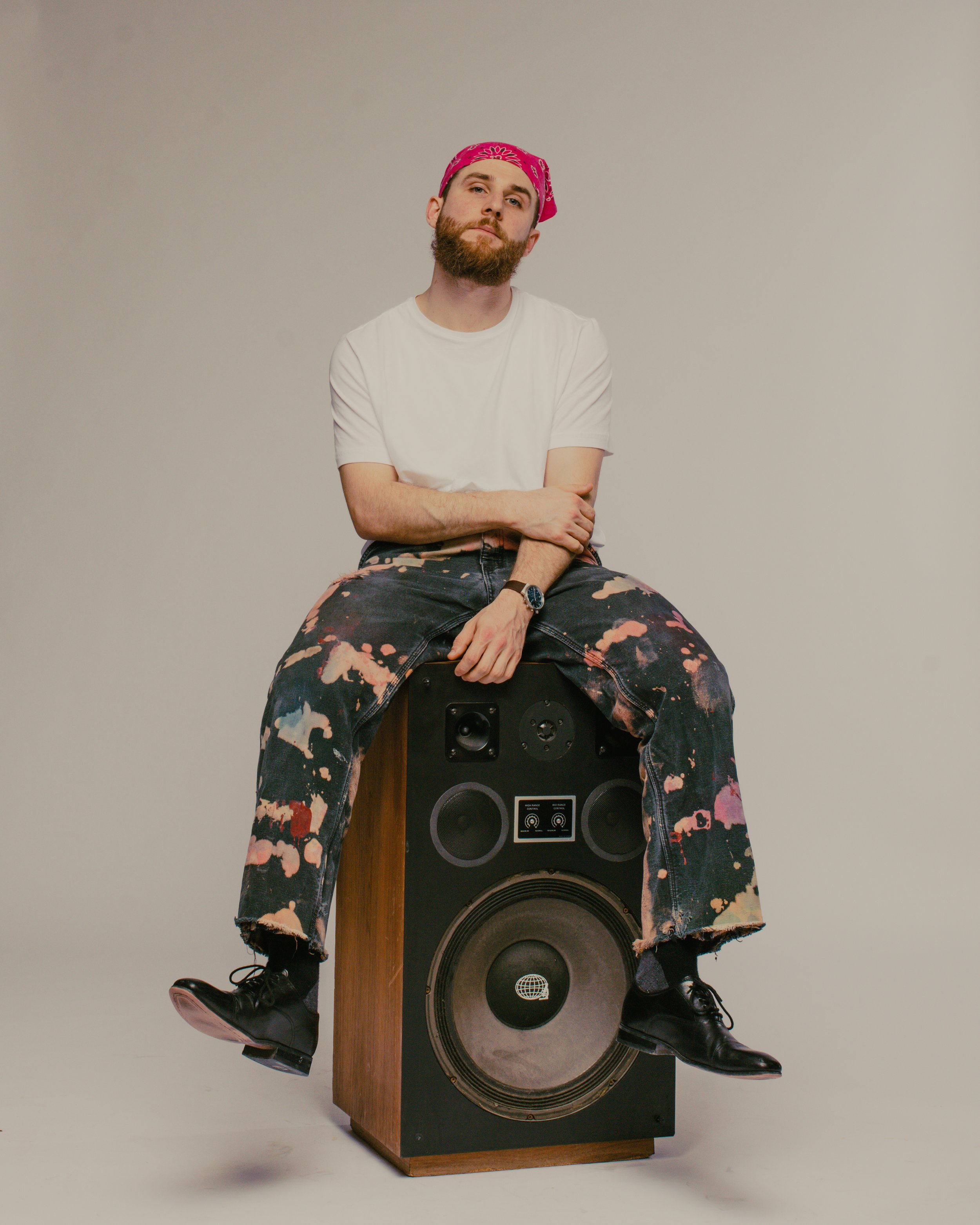
You’ve got listener pockets across cities like Johannesburg, Lagos, LA, and London. What do you think is translating globally in your sound?
As much as I’m rooted in hip hop, I’ve always explored sounds and never cared to fit into a mold or a box. I listen to a lot of different music and have always found myself studying. I’m glad it resonates because the intention for the music has always been in service of the art, the rest is far past secondary to me.
When it comes to visuals and live performance, what does the Pat Williams sonic world look like? If someone came to a show with zero context, what should they understand about you without you saying a word?
That when you press play it’ll be for the experience not the theatrics. I was talking to my girl about this the other day (she’s a phenomenal singer and is obviously on the album). We were talking about shows and I mentioned that sometimes performances can come across as just that - performative. Live shows should encourage reinvention. It’s an opportunity to exercise ideas and concepts more thoroughly. Basketball fans don’t pay to watch you during shoot around - they know you can hit those shots - that’s why they showed up. They want something to go home with, talk about and excite them. I think there’s plenty of ways to do that.
What’s one belief you had about love, or yourself, that your recent writing has complicated—something you can’t simplify anymore?
I always want to go deeper. Writing is something I pride myself on, so to simplify in general honestly has always been a challenge for me. I have faith in an audience picking things apart, that’s the joy with me and art at it’s core. It’s about discovery and taking something with you that you haven’t found yet. That’s the experience I’d like to give time and time again. I’m pivoting between wrapping this album up and starting another, I can feel my perspective change on some things, so it’s not that my belief system has complicated my process, it’s that my belief system is evolving - which is what this album was meant to do.
For a first time listener, what song is the front door to your catalog, and what song is the private room that reveals the deeper thesis?
REASSURANCE is pretty representative of what I like to do and covers a lot of ground. Much of what I enjoy doing most is based on duality. Playful wordplay with deeper messaging, string sections outros with bouncy drums. It contains all the essentials and layers in my approach most of the time.